Growing Number of Automatic Transmission Speeds

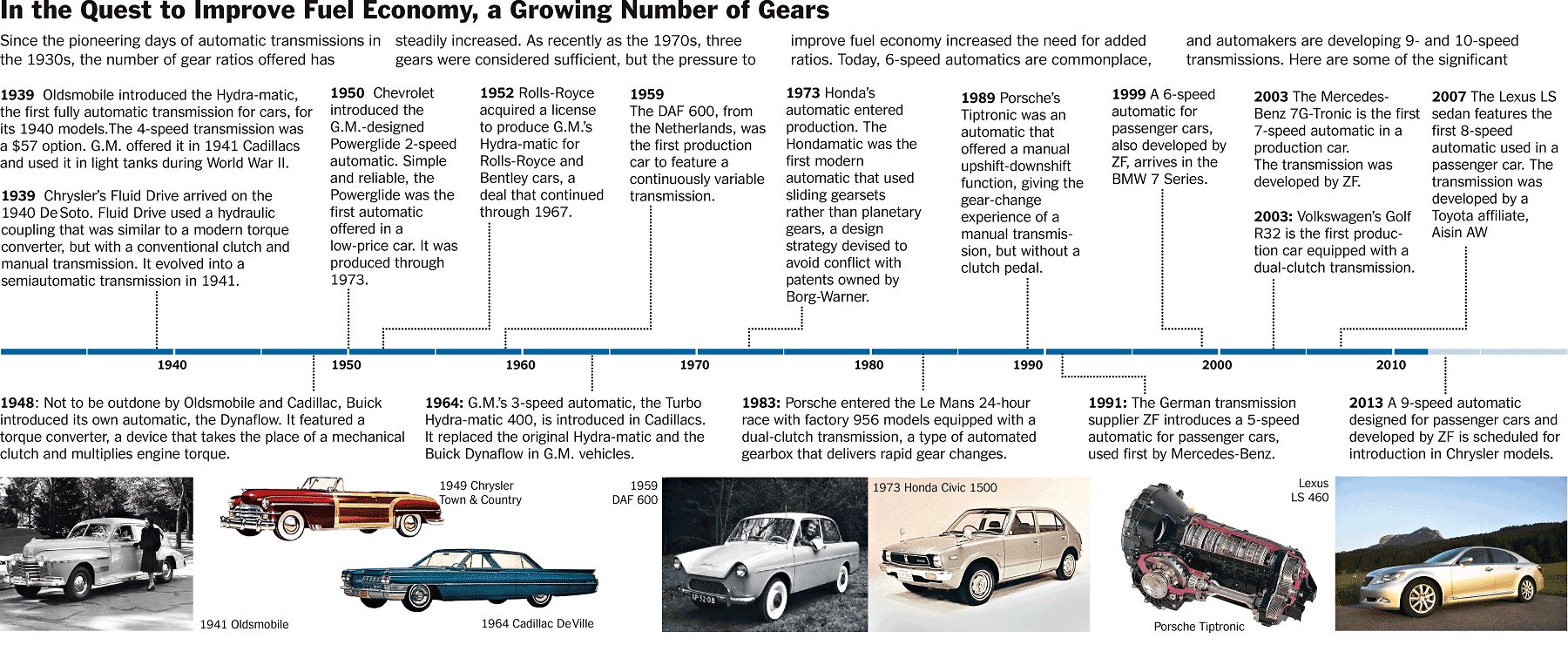
In case you didn’t catch it, the New York Times auto section recently had an interesting article on how the number of speeds in the automatic transmission has increased over the years. In the 1980s four speed gearboxes were the norm, which increased to five and six speeds in the 1990s, to more recently Chrysler planning to offer a 9 speed automatic starting in 2013.

The article explains how more stringent fuel efficiency regulations are increasingly driving up the number of speeds being introduced into automatic transmissions and why, for example, the Ford Fiesta and the Chevy Sonic (previously reviewed by RedlineNorth) have the same fuel efficiency as the larger Ford Focus and the Chevy Cruze (hint: it’s a function of available space).

It’s important to note that a lot of efficiency can still be squeezed out of the existing internal combustion engine. This opportunity is one of the main arguments that some auto manufacturers use when explaining why they have not developed their own electric vehicle or other alternative fuel models. Of course, the efficiencies derived from engine improvements can get applied in a variety of ways from increasing the horsepower and weight of the vehicle, to increasing its fuel efficiency, and usually in that order.

One could argue it is only when manufacturers are given an ‘incentive’ to increase fuel efficiency, such as through regulations, that the benefits of engine improvements get applied to overall vehicle fuel efficiency. It’s never that simply however.

The Times article also touches upon the immense amount of research and development required to develop new transmissions and how automakers are trying to reduce, or share, their investment and risk in transmission development through joint partnerships, such as between GM and Ford.  What seems certain is that more and more passenger vehicles will enter the market in the near future with an increasing number of transmission speeds.

The following infographic from the New York Times article provides a good overview how the number of gears has increased over time.

Increasing number of gears (Source: New York Times)

Sources: New York Times, Reuters Canada, US DOE, Car and Driver and egm CarTech

Retiring Car Dealer’s Gift to Staff

What do you do when you have sold your car dealership and are about to retire, but want to thank your staff?  If you are 83 year old Howard Cooper from Howard Cooper Import Center in Ann Arbor Michigan you give your employee’s $1,000 for each year of their service with the company.

Howard Cooper (Source: Fox News Video)

The dealership which opened in 1965 selling Volkswagens had 89 employees before it was sold to a motor company based in Ohio in April. However, Cooper only recently surprised employees with their bonus cheques.  At least one employee had been with the company 46 years and another for 26 years, although the total amount of money dispersed was not revealed.

Part of the sales agreement for the dealership was the retention of the employees so not only are the employees getting a bonus they are keeping their jobs as well.

Well done Howard!

Source: (Wheels.ca, Huffingtonpost.com)

Grand Prix of America

The ultimate global marquee in auto sports is the Formula One series and this past July, F1 Chief Bernie Ecclestone confirmed that New Jersey will be on the 2013 Grand Prix schedule.

Coined the Grand Prix of America, it will be a new Formula One World Championship race taking place in June 2013 and beyond. The race will be held on a yet-to-be-constructed 3.2-mile street circuit through the New Jersey towns of West New York and Weehawken, along the Weehawken Port Imperial. The circuit offers the New York City skyline as a panoramic backdrop.

In celebration of this announcement Red Bull Racing’s show car recently starred in an amazing video where former F1 driver David Coulthard pilots the 2011 Championship-winning RB7 through Liberty State Park showing off the spectacular views of the New York City skyline and the Statue of Liberty.  We will let the video do the talking from here.

New Formula ‘E’ Racing Series Announced

News this week that FIA, the International Motorsport Federation, has announced a global series of city centre electric car races.  The objective of the series is to have 10 teams and 20 drivers participating in the competition and it will be open to any cars sanctioned as ‘Formula E’ by the FIA.

The commercial rights to the FIA Formula E Championship has been licensed to a consortium of investors, Formula E Holdings Ltd (FEH). FEH has as anchor investor London-based entrepreneur Enrique Bañuelos, and as CEO and shareholder former MEP and racing team owner Alejandro Agag.

Audi R18 e-tron quattro the first electric hybrid to win the 24 Hours of Le Mans

Demonstration runs will start in 2013 and the full series will being in 2014.

Locations could include Hong Kong, Rio de Janeiro, Moscow, Shanghai, Beijing, Mumbai, Sydney, Cape Town, Mexico City, and Los Angeles.

However, it’s likely to early to confirm all of the cities that will be participating.

Source: FIA

If only we had a spare million dollars….

A few months ago, we did a post on celebrity rides and referenced Aerosmith frontman Steven Tyler’s recent purchase of the first production Hennessey Venom GT Spyder model. Well, we thought it was a good time to revisit the Hennessey Venom GT — still the fastest production car on the planet. Hennessey claims the car can achieve a top speed of 272 mph (437 km/h).

Based on a highly modified Lotus Exige chassis, the Venom GT is powered by a twin-turbocharged version of General Motors’ 6.2 L (380 cu in) LS9 V8 from the Chevrolet Corvette C6 ZR1. The modified engine produces 1,200 HP and 1,155 lb-ft. torque. Yes, this is not a typo it produces 1,200 HP! Of course there is a catch though and that’s the price which starts at $1 million USD.

The mid-engine V8 is paired to the rear wheels with a Ricardo 6-speed transmission. The bodywork leverages handmade lightweight carbon fiber along with carbon fiber wheels resulting in a production curb weight of only 2,700 lb (1,200 kg). To deliver the ultimate supercar stopping power required braking components include 15 inch carbon ceramic rotors and Brembo 6-piston calipers in the front and 4-piston calipers in the rear.

However, to truly experience this car you need to watch the following video as pictures just do not do it justice.  The video is of Steven’s actual car as he kindly shared it for a recent episode of Drive’s show Tuned. I guess we all know why he did American Idol now?

Pebble Beach Concours d’Elegance hits sales record

Wow, that’s all we can say about the sales results from last weekend’s Pebble Beach Concours d’Elegance car festival.  The five auction houses that participated in the annual auto festival sold a combined $260 million USD of vehicles last weekend, up 31% from the previous record of $198 million USD set last year, according to Hagerty Insurance, which tracks collector-car prices. The highest price came from Santa Monica based auction house Gooding & Co. when they sold a 1936 Mercedes-Benz 540K Special Roadster for $11.8 million USD.

1936 Mercedes-Benz 540K Special Roadster

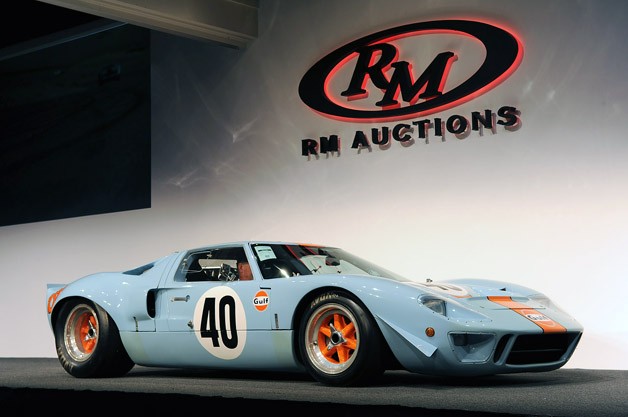
The events second top seller was a 1968 Ford GT40 sold for a record breaking $11 million USD by Blenheim, Ontario’s very own RM Auctions making it the most expensive American car ever sold at auction.

1968 Ford GT40

For more photos check out the following Globe and Mail slide show of the event.

Consumer Reports: Total Cost of Car Ownership

Consumer Reports have recently published an analysis on the total cost of ownership of a new vehicle over a one, three, five and eight year period.  They have used a number of factors in their analysis including depreciation, fuel, interest on financing, insurance, sales tax, as well as average maintenance and repair costs.

Their analysis has produced some interesting results.  First and foremost the median cost of ownership for a new vehicle is more than $9,100 a year, over a five year ownership period.  Furthermore, the largest single cost in a new vehicle is depreciation, making up 48% of costs in the first five years. This of course assumes that you will be eventually selling the new vehicle down the road and not driving it into the ground.

Consumer Reports Analysis

Courtesy: Consumer Reports.org

The second largest cost is fuel accounting for 24%, while interest on vehicle financing is third with 11%, again over a five year period.

As indicated at the beginning of this post the Consumer Reports analysis is based on a number of assumptions, such as the cost of fuel ($4.20/gallon or $1.11/litre), insurance, interest (6%, 15% down, 5 years – also assumes the vehicle isn’t bought outright at the beginning) and sales tax (5%) to name a few.

All of their assumptions are reasonable and necessary for a broad based analysis, but can vary widely across different jurisdictions. One should keep this in mind when reading the results.

Nonetheless, based on their analysis, the least expensive car to own is Toyota Prius which costs just $5,000 a year to own for five years.  While the most expensive vehicle in the list is the BMW 750Li at a whopping $21,500 a year, for a five year period.

A complete breakdown on the ownership cost per model can be found below.

For a more in depth analysis, including further details on the assumptions used and how that may relate to your situation read the complete article here.

Ownership Costs by Vehicle
(Source: Consumer Reports)

Lowest cost Highest cost
Make & Model Cost/year over 5 years Make & model Cost/year over 5 years
Small cars
Toyota Prius C $5,000 Mitsubishi Lancer ES $7,000
Toyota Corolla Base 5,250 Mazda3 Hatchback 7,000
Honda Fit (base) 5,250 Nissan Sentra 2.0 SL 7,000
Smart ForTwo 5,500 Ford Focus Hatchback 7,000
Honda Fit Sport 5,500 Kia Soul 7,000
Mazda2 (MT) 5,500 Kia Forte Hatchback 7,000
Scion xD (MT) 5,500 Kia Forte Koup 7,250
Toyota Yaris Hatchback 5,500 Chevrolet Cruze 1.4T 7,250
Scion xD (AT) 5,750 Suzuki SX4 Hatchback 7,500
Toyota Corolla LE 5,750 Chevrolet Cruze ECO 7,500
Family sedans
Toyota Camry Hybrid 6,500 Toyota Camry (V6) 8,250
Volkswagen Passat TDI 6,500 Ford Fusion (V6, FWD) 8,250
Toyota Camry (4-cyl.) 6,750 Chevrolet Impala (3.6) 8,250
Hyundai Sonata Hybrid 6,750 Nissan Altima (V6) 8,500
Hyundai Sonata (2.4) 6,750 Subaru Legacy 3.6R 8,500
Honda Accord (4-cyl.) 6,750 Chrysler 200 (V6) 8,500
Ford Fusion (4-cyl.) 7,000 Kia Optima 2.0T 8,750
Mazda6 (4-cyl.) 7,000 Ford Fusion (V6, AWD) 8,750
Nissan Altima (4-cyl.) 7,250 Mazda6 (V6) 9,000
Subaru Legacy 2.5i 7,250 Volkswagen Passat (V6) 9,250
Upscale & luxury cars
Lexus CT 200h 7,750 Lincoln MKS AWD 13,000
Buick Verano (2.4) 7,750 BMW 535i 13,250
Audi A3 2.0T 8,000 Mercedes-Benz E350 13,500
Buick Regal (2.4) 8,000 Jaguar XF 13,500
Acura TSX (4-cyl.) 8,250 Hyundai Equus 14,000
Buick Regal (turbo) 8,500 Lexus LS 460L 16,000
Buick LaCrosse eAssist 8,750 Jaguar XJL 19,000
Infiniti G25 Sedan 9,000 Audi A8 L 20,000
Toyota Avalon 9,000 Mercedes-Benz S550 20,500
Volkswagen CC 2.0T 9,000 BMW 750Li 21,500
Lowest cost Highest cost
Make & Model Cost/year over 5 years Make & model Cost/year over 5 years
Small SUVs
Toyota RAV4 (4-cyl.) $7,000 Subaru Forester 2.5XT (turbo) $8,250
Honda CR-V 7,250 Nissan Xterra 8,750
Nissan Juke 7,250 Mitsubishi Outlander (V6) 9,000
Mitsubishi Outlander (4-cyl.) 7,500 Kia Sportage (2.0T) 9,250
Hyundai Tucson (2.4) 7,500 Volkswagen Tiguan 9,750
Midsized SUVs
Hyundai Santa Fe (4-cyl.) 8,000 Dodge Journey V6) 10,750
Chevrolet Equinox (4-cyl.) 8,000 Nissan Pathfinder (V6) 10,750
GMC Terrain (4-cyl.) 8,000 Ford Explorer (V6) 11,250
Kia Sorento (4-cyl.) 8,250 Jeep Grand Cherokee (V6) 11,250
Jeep Liberty 8,500 Jeep Grand Cherokee (V8) 12,750
Large SUVs
Ford Flex (V6) 10,500 Dodge Durango (V8) 13,500
GMC Acadia 10,500 Ford Expedition 14,000
Chevrolet Traverse 10,500 Chevrolet Suburban 14,000
Ford Flex (EcoBoost, V6) 11,750 GMC Yukon XL 14,250
Dodge Durango (V6) 12,250 GMC Yukon (5.3) 15,000
Upscale/luxury SUVs
BMW X3 (3.0) 10,250 Mercedes-Benz ML350 14,250
Land Rover LR2 10,500 Land Rover LR4 14,250
Infiniti EX 10,500 Mercedes-Benz GL350 BlueTec 15,000
Audi Q5 3.2 11,250 Porsche Cayenne (V6) 15,250
Lexus RX 350 11,250 Infiniti QX56 15,500
Buick Enclave 11,250 Lincoln Navigator 15,750
Volvo XC60 11,500 Toyota Land Cruiser 16,000
Mercedes-Benz GLK350 11,500 Land Rover Range Rover Sport 16,250
Land Rover Range Rover Evoque 11,500 Mercedes-Benz GL450 16,500
Acura MDX 11,750 Cadillac Escalade (base) 17,250
Lowest cost Highest cost
Make & Model Cost/year over 5 years Make & model Cost/year over 5 years
Minivans & wagons
Toyota Prius V $6,000 BMW 328xi Wagon $10,000
Volkswagen Jetta Wagon TDI 6,250 Dodge Grand Caravan SXT 10,250
Volkswagen Jetta Wagon SE 7,500 Kia Sedona 10,500
Mazda5 7,750 Nissan Quest 10,500
Subaru Outback 2.5i 8,000 Chrysler Town & Country 10,750
Sporty cars & convertibles
Mini Cooper Hatchback Base 5,750 Lexus IS 250 Convertible 11,000
Honda CR-Z 6,000 Subaru Impreza STi 11,000
Fiat 500 Sport 6,000 Chevrolet Camaro Convertible SS 11,000
Volkswagen Beetle 2.5 6,500 Mitsubishi Lancer Evolution 11,250
Fiat 500 C 6,500 BMW 328i Convertible 11,750
Mini Cooper Hatchback S 6,500 Audi A5 2.0T 11,750
Scion tC 6,500 Infiniti G37 Convertible 11,750
Hyundai Veloster 6,750 Chevrolet Corvette Base 12,750
Kia Forte Sedan 6,750 Chevrolet Corvette Z06 14,500
Honda Civic Si 7,250 Jaguar XK 19,000
Pickup trucks
Toyota Tacoma (V6) 8,500 Chevrolet Avalanche 13,000
Chevrolet Colorado 9,250 Dodge Ram 2500 Turbodiesel 13,750
Nissan Frontier 9,250 Ford F-250 Turbodiesel 14,000
GMC Canyon 9,500 GMC Sierra 2500HD Turbodiesel 14,250
Honda Ridgeline 9,500 Chevrolet Silverado 2500HD Turbodiesel 14,25

Pikes Peak Crash

Pikes Peak is a fourteen thousand foot peak in the United States, located 10 miles (16 km) west of the city of Colorado Springs.  It is also the location of the Pikes Peak International Hill Climb, an annual automobile and motorcycle hill climb to the summit. The elevation climbs from 4,720 ft (1,440 m) from the start to the finish at 14,110 ft (4,300 m), on grades averaging 7%.  Of course what goes up must come down, as driver Jeremy Foley and his co-driver found out a couple of days ago around mile 16 in an area of the mountain known as Devil’s Playground.

Their Mitsubishi EVO VIII flipped numerous times as it rolled down the hill in what could be misconstrued as Hollywood stunt. Thankfully both were not seriously hurt in the crash.

McLaren MP4-12C Review

We thought it was time to take a closer look at one of the coolest supercars available today. We are talking about the McLaren MP4-12C, the amazing sports car designed and manufactured by the UK’s McLaren Automotive. It is the first production car wholly designed and built by McLaren since the McLaren F1.  With a sticker price in the $250,000 CAD range the MP4-12C is priced to compete with the Lamborghini Gallardo and Ferrari 458. Although the price is elitist to say the least, there are recent reports that 55 of the MP4-12C’s have been sold this year alone in Canada. Who says there’s a recession still?

The MP4-12C features a carbon fibre composite chassis, and is powered by a mid-mounted McLaren M838T 3.8-litre V8, twin-turbo engine developing approximately 592 HP  and 443 lb ft of torque. According to McLaren, the MP4-12C can accelerate from 0 to 60 mph in 3.3 seconds and 0 to 200 km/h (124 mph) in 8.9 seconds, however if optional Corsa tires are used acceleration times are further improved on with 0 to 62 mph completed in 3.1 seconds. The car has a top speed of 333 km/h (207 mph) and can brake from 200 km/h (124 mph) to a complete stop in under 5 seconds. Braking from 100 km/h (62 mph) to zero can be done in under 30 metres (98 ft). Power is transmitted to the wheels through a 7-speed Seamless Shift dual-clutch gearbox.

This car and its performance stats are absolutely incredible and securely puts it in the ultimate supercar class. The MP4-12C also leverages its Formula 1 heritage by using F1 racing technologies such as “brake steer”, where the inside rear wheel is braked during fast cornering to reduce understeer.

And if this wasn’t enough, for those drivers who just won’t settle unless they have an open car there is also the incredible McLaren 12C Spider. It has all of the fun and performance of the closed model but with a unique retractable hard top (RHT) folding roof system.

To get a sense of the visceral experience of this super machine you need to watch the official launch video.

For more information on how you can get behind the wheel of this ultimate “Widowmaker” check out the official site of Woodbridge, Ontario based Toronto McLaren.

2012 Buick Verano Review

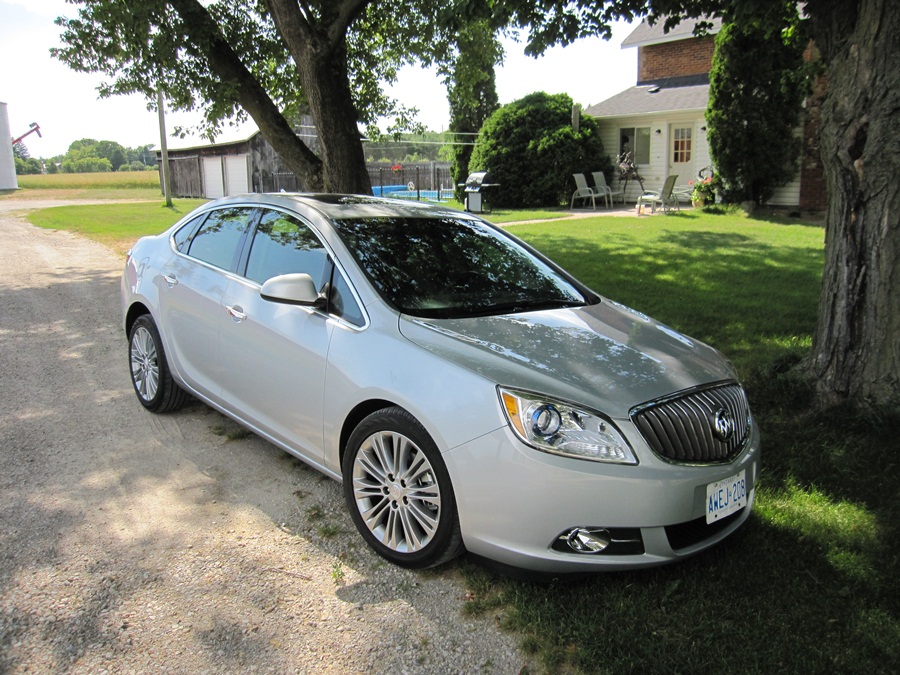
For a week in July, Team RedlineNorth had the opportunity to put a 2012 Buick Verano sedan through its paces.  As Verano is the Spanish word for summer it was rather fitting we reviewed it during one of the hottest weeks this season. Redesigned for 2012, the Buick Verano shares GM’s Delta II platform with the Chevrolet Cruze, and is the first compact sedan marketed by Buick in North America since the 1997 Buick Skylark.

Our silver 2012 Buick Verano review vehicle came in the 1SG trim package which includes the following:

  • 2.4L DOHC 4-cylinder engine with Direct Injection and Variable Valve Timing (VVT) making 180 horsepower and 171 lb.-ft. of torque
  • 6-speed automatic transmission
  • 10 airbags
  • Leather heated driver & front passenger seats
  • Bose premium 9-speaker sound system
  • OnStar® with 6 months of the Directions & Connections Plan, Turn-by-Turn Navigation and OnStarRemoteLinkTM
  • Air conditioning, keyless entry, power windows, locks and mirrors, cruise control, SiriusXM Satellite Radio, USB port and auxiliary audio input jack, and Bluetooth: hands free phone and audio connectivity.
  • 18 inch painted aluminum wheels
  • Trunk/storage space – 14.3 cubic feet– based on GM Canada’s vehicle information
  • $27,620 CAD MSRP from GM Canada’s website as of August 8, 2012 ($22,595 for entry level)

The interior lived up to all the hype with its luxurious leather seating, full colour touch screen display, sleek functional gauges and ultra modern ambient lighting. Dubbed as one of the quietest sedans ever produced, the Verano really delivers with its whisper quiet cabin and smooth classic sedan ride and feel.

With the average Buick owner in North America holding steady at age 59, GM is pushing hard to attract younger buyers and sporty new models like the Verano are a step in the right direction. The Verano’s sister model, the Buick Excelle was China’s best-selling passenger car in 2011 as China continues to be GM’s largest market for Buick and a great test ground for the development of new models.

Over the week, we averaged 9.7L/100 km (24 MPG) which is significantly higher than GM’s/Transport Canada’s official 6.2L/100 km (38 MPG) fuel consumption rating. However, this is based on the total mileage, which was more city based than highway miles so at the end of the day the fuel consumption was solid for the sporty sedan. Over the review, we took the Verano through a daily commute to downtown and traveled north to the heartland and farms of Georgian Bay’s Huronia region.

Our only complaints over the course of the week were during long drives the lower lumbar section of the front seats felt a bit awkward.  As well, at certain points in the acceleration curve the six speed automatic transmission seemed to be out of place resulting in lag. Nevertheless, in spite of these minor issues the Buick Verano delivered on its promise to provide a modern and more youthful experience from the oldest active American automotive brand.  And more importantly, we are quite sure Buick founder, David Dunbar Buick would approve of the direction GM is going with its 2012 Buick Verano model. Overall, we give it a 4.2 rating out of 5 in its class.

The main competitors to the Verano in the compact luxury segment are the Lexus IS 250, BMW 3 series, Acura TSX and the Audi A4 all of which start at a much higher price point.  That being said, the Verano also has competition from the Hyundai Sonota, Honda Accord and Toyota Camry especially with the lower entry level price of $22,600 CAD.

This places the Verano squarely in between both market segments and sales are quickly growing- surpassing 3,000 units in the US in May, over half of which were non-traditional GM buyers.