A legend is gone…

Yesterday, there was some very sad news in the automotive world as we learned of the passing of the  American automotive designer and racing driver Carroll Hall Shelby (January 11, 1923 – May 10, 2012).  Mr. Shelby passed yesterday at Baylor Hospital in Dallas at the age of 89.

Caroll Shelby was most well known for making the AC Motors-based Shelby American Cobra and later the Mustang-based performance cars for Ford Motor Company known as Mustang Cobras. His company, Shelby American Inc., founded in 1962, currently sells modified Ford vehicles, as well as performance parts.

The AC Cobra, also known as the Shelby Cobra in North America, is a legendary sports car that was produced during the 1960s. With it’s amazing horsepower to weight ratio the Cobra had the title of fastest production car of the day during the 60’s. This trait stands out in a story I read many years ago about comedian Bill Cosby, who while rising to fame bought an original Shelby Cobra but had to sell it soon after, as he was too afraid of the immense power from the epic roadster.

Today, there are many companies that build replica Shelby Cobras around the globe.  One of the biggest names in the replica business is California based, Superperformance which sells three different body styles of replica Cobras.

Replica or the real thing, most people will never have the chance to experience the ultimate visceral thrill of the Shelby Cobra on the road or the track so take a minute to listen to one in action.  Here is a video that provides a little taste of the raw power of the AC Shelby Cobra.

There are already many tributes appearing online from all over the globe and there will be many more to come in both the mainstream press and the automotive press about the man who stood for so much in the automotive world.  He will be dearly missed and hopefully his spirit will continue to inspire others to push the boundaries in the automotive industry. We will miss you Carroll Shelby.

OK Go Music Video

You may not be a fan of alt rock band OK Go, but you can probably appreciate the level of difficulty in making music with a car in their video Needing/Getting. The car in question is the Chevy Sonic, which the Redlinenorth Team will be reviewing first hand in an upcoming post.

According to an interview with Car And Driver, the original concept for “Needing/Getting” grew out of a 2010 video for the song, “This Too Shall Pass.” In that video the band sings while dominoes topple, balls and tires roll, umbrellas fly, and the like.

In the Needing/Getting a rally style track has been set up and each stage comprises a section of the song. A specially fitted Chevy Sonic then travels round the track clanging symbols and strumming guitars with fishing poles that have been attached to the vehicle at appropriate intervals. The sound and video is then recorded in multiple takes and assembled in editing.

For more details on how the video was put together check out the Car And Driver article otherwise enjoy the video.

The Texas Mile and the 250 MPH + Camaro

Well the old saying everything is bigger in Texas sure comes to life here.The Texas Mile has grown rapidly since the inaugural event in October 2003. Participants now come from all over the United States, Canada and Mexico to test themselves and their machines on the fastest and most challenging one mile track in the world. They achieve their top speed in one mile and shut down in a 1/2-Mile. This bi-annual Motorsports Festival is created for the performance enthusiast – Welcoming Motorcycles, Performance Street Cars, Race Cars and Land Speed Racers.

One such machine is the 2000 Chevy Camaro owned by Kelly Bise, driven by Josh Ledford and built by Houston, Texas based Late Model Racecraft.

See the Camaro in action at the Texas Mile in March 2012.

Specs are as follows:

  • 461 cubic inch V8 Big block with twin turbos pushing over 2000 HP at the wheels
  • It is officially the fastest Camaro in the World

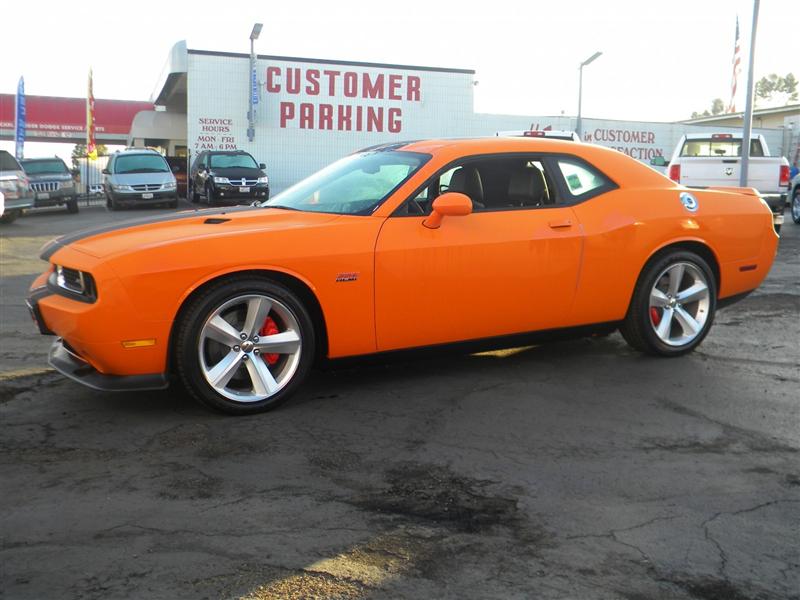
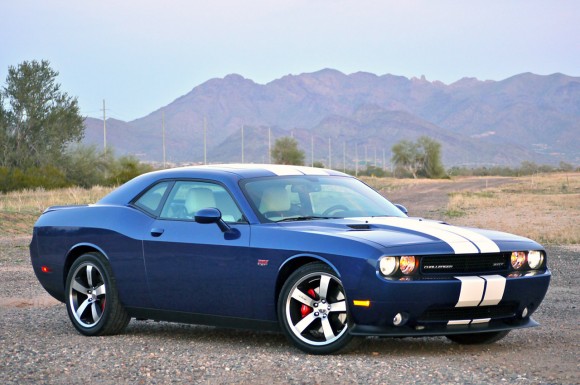
2012 Dodge Challenger SRT8

The third and current generation of the Dodge Challenger was introduced in 2008 and has become a cult classic with Mopar fans around the World as it has sold quite well for the past four years.

In this review, we want to take a closer look at the top of the line model the 2012 Dodge Challenger SRT8.

Created by engineers at Dodge to compete with the other Pony cars of the day such as Chevy’s new generation Camaro and Ford’s GT Mustang, the Dodge Challenger SRT8 comes equipped to compete.  With a sticker price of $49,095 CAD plus applicable taxes the Challenger is priced well among its competitors.  With its full size rear seats, sports tuned suspension, Brembo brakes, fire-breathing, 470 HP Hemi engine and 20 inch wheels it is a true retro muscle car that captures all the excitement of the late 60s, early 70s era muscle cars.

There is a Standard Fuel Saver Technology (four cylinder mode) in automatic transmission equipped models that allows the engine to operate economically on four cylinders or use the power of all eight cylinders when needed. This technology does result in some very respectable metrics at the pump with the car averaging 20 + MPG. Unfortunately, with a 470 HP Hemi engine what do you expect?  And, yes, you don’t buy this car if mileage is your number one priority.

Specs are as follows:

  • 6.4L – 392-cubic inch HEMI® V-8 delivers 470 horsepower and 470 lb.-ft. of torque
  • 0 to 60 MPH – approx 4.7 secs
  • Top speed – 180 MPH
  • Braking is 60 MPH to 0 in 117 feet
  • 14/23 MPG (City/Hwy) ratings for the 2012 Dodge Challenger SRT8 392
  •  Nappa Leather-faced seats with suede perforated inserts
  • 20-inch forged aluminum wheels
  • Brembo brakes
  • Heated steering wheel

Here is a recent US video review

On a very sad note, I wanted to highlight a recent article from the National Post written by the legendary auto writer Graeme Fletcher titled Chrysler’s Dan Knott: ‘His passion shone through’. It is worth a read and goes on to explain how Dan was a pioneer at Chrysler and essentially the “godfather” of Chrysler’s Street and Racing Technology (SRT) which is the group that is behind the amazing technology that make these cars the ultimate road machines they are today.

Ken Block’s Ford Fiesta Does Gymkhana Hot Wheels-Style

A few weeks ago we posted a video of rally car driver Ken Block taking his Ford Fiesta rally car through the Autodrome de Linas-Montlhéry in the third instalment of his Gymkhana video series. Well the folks over at Hot Wheels have created a replica of Block’s Fiesta and the following is a video of the RC version of the car tearing it up around Venice beach, California.

After watching the video it makes you want to go out and get one of these!

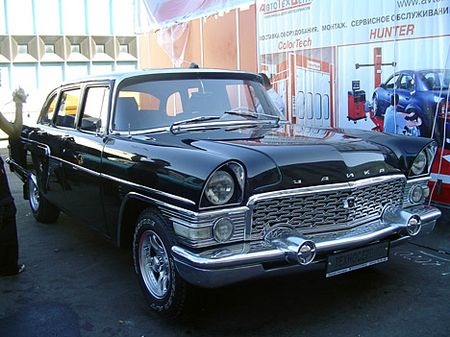
Chaika

A Chaika (Ча́йка), which means gull, is a luxury automobile from the Soviet Union that was produced from 1959 to 1981 by GAZ. There were only 3,100 vehicles built during the 22 year production run, largely because it was never for sale to the public. Chaika’s and its more upscale cousin, the Zil limousine, were only available to Soviet elites. Nikita Khrushchev, although entitled to a ZIL, was known to prefer Chaikas.

The early Chaikas model M13 produced from 1959 to approximately 1977 very closely resembled the American Packard Patrician from the same era. The M13 was powered by a a 195 horsepower (145 kW) 5.5L V8 with a top speed of 99 mph (158 km/hr).

20120426-200501.jpg

20120426-202007.jpg

In the late 1970s the M14 was introduced with more modern styling and had an updated 220 hp engine.

20120426-201653.jpg

The Chaika model was discontinued in 1988 and can now be found in museums such as this unique museum outside of Moscow which features over 300 vehicles from the Soviet era.

Today, GAZ specializes in mid-price and premium cars all sold under the Volga brand.

The history of NASCAR

Stock car racing in the United States has its origins in bootlegging during Prohibition, when drivers ran bootleg whiskey made primarily in the Appalachian region of the United States. Bootleggers needed to distribute their illicit products, and they typically used small, fast vehicles to evade the police. Many of the bootleg drivers would modify their cars for speed and handling, as well as increased cargo capacity, and some of them came to love the fast-paced driving down twisty mountain roads.

Typical car used by Moonshiners to transport illegal booze.

Although the end of Prohibition in 1933 dried up the majority of the Moonshiners business, many Southerners had developed a taste for the illegal booze, and a number of the drivers continued “runnin’ shine”, to evade the “revenuers” who were attempting to tax their profits. The cars the Moonshiners used continued to be improved, and by the late 1940s, races featuring these cars were officially being organized. These cars were mainly street vehicles that had been lightened and reinforced to provide drivers with more power and control to tackle the local dirt tracks.These races became popular entertainment in the rural Southern United States, and most of them took place in the Wilkes County region of North Carolina, situated in the heart of the Blue Ridge Mountains.

One of the most famous retired Moonshine drivers is Robert Glenn Johnson, Jr. better known as Junior Johnson, it is said that he was never caught by police during his years of running booze. He became one of the early superstars of NASCAR in the 1950s and 1960s. He won 50 NASCAR races in his career before retiring in 1966. In the 1970s and 1980s, he also became a NASCAR racing team owner and sponsored NASCAR champions such as Cale Yarborough and Darrell Waltrip. He is also credited with discovering the technique of drafting.

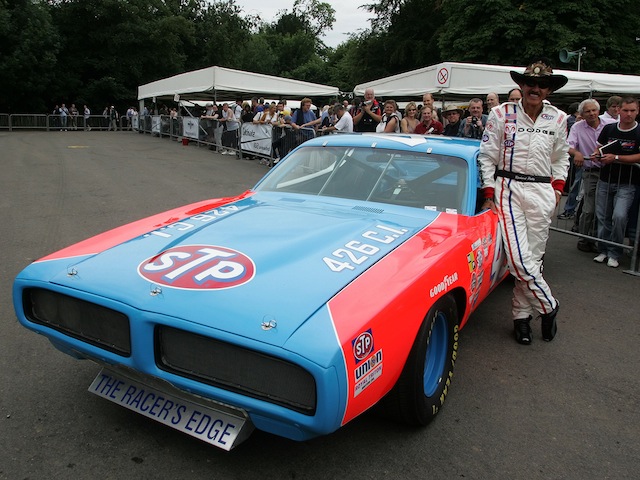
The ultimate King of NASCAR is Richard Petty and he is most well known for winning the NASCAR Championship seven times (Dale Earnhardt is the only other driver to accomplish this feat), while also winning a record 200 races during his career, winning the Daytona 500 a record seven times, and winning a record 27 races (ten of them consecutively) in the 1967 season alone.

Of the recent modern era, Dale Earnhardt, Jeff Gordon and Jimmie Johnson are considered the best of all the time with a combined total of 20 championships and 209 wins. Unfortunately, Dale Earnhardt died tragically in a crash during the 2001 Daytona 500 when Earnhardt’s car hit the wall nose-first at an estimated speed of 160 mph.

As for NASCAR cars today – they are all built with similar specs below to keep the pack competitive:

  • V8 Engine
  • Electronic fuel injection * 2012 is first year this is being used for Sprint cars
  • Displacement:
    • Approx 355 cubic Inches
    • 750-850 HP
  • Top speeds: without restrictor plates – 220+ MPH plus at Talladega Superspeedway was done by Rusty Wallace in 2004 on test lap
  • Transmission: 4-speed manual w/ reverse
  • Curb Weight: 3450 lb.
  • Chassis: Steel tube frame with safety roll cage
  • NASCAR Steel 15 in. x 10 in.
  • Racing fuel

Jimmie Johnson’s 2012 car

Jeff Gordon’s 2012 car

With over 75 million race fans and sales of over $3 billion annually, NASCAR is the biggest form of motorsport in the US.  More Fortune 500 companies sponsor NASCAR than any other motor sport in North America, although the sport’s popularity has been in decline since the early 2000s. For more information please visit the official website of NASCAR.

2012 Spring Mudfest at Gopher Dunes

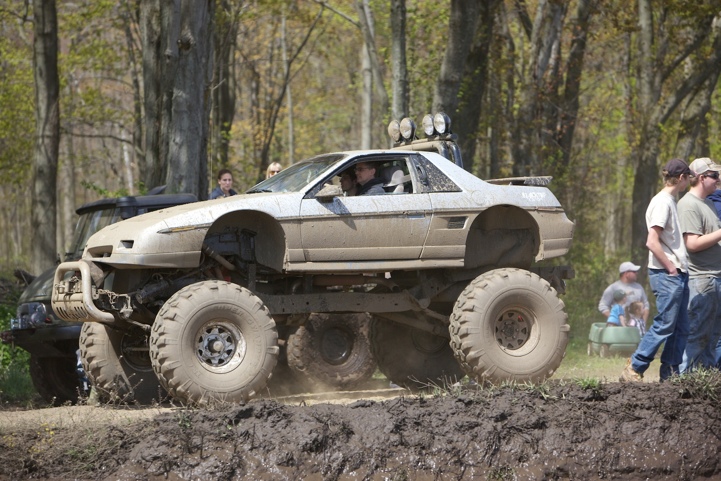
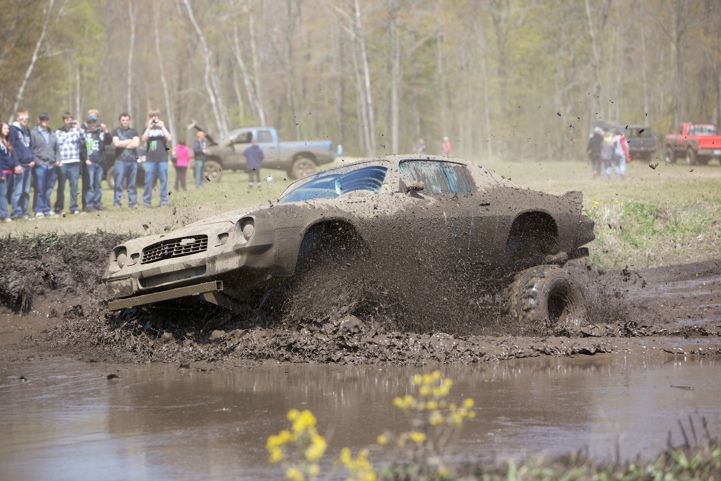
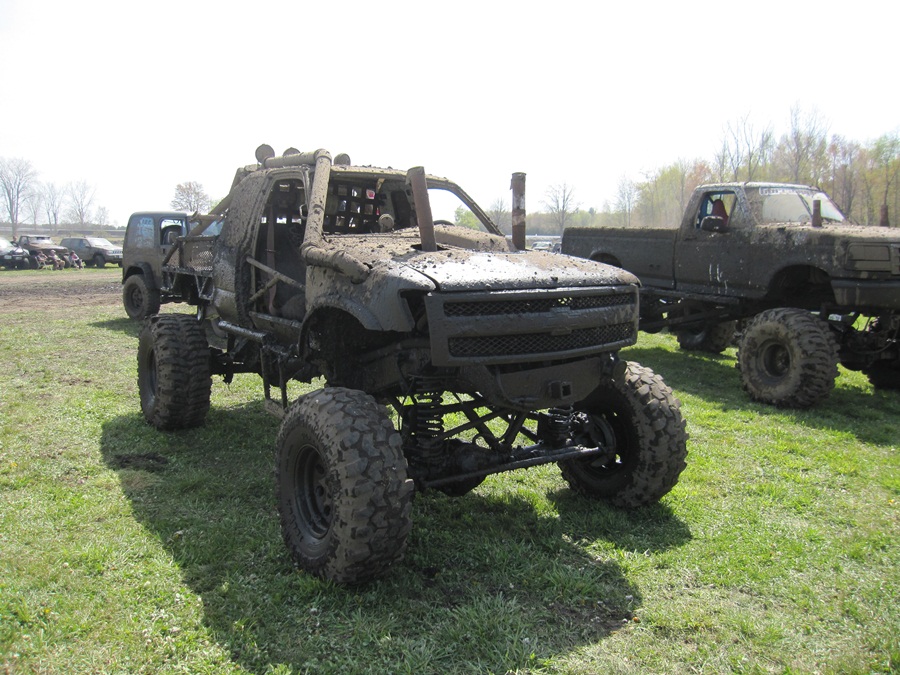
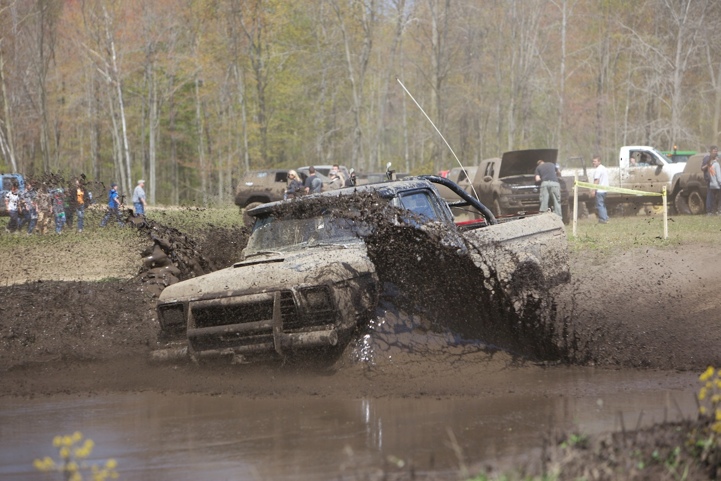
This past weekend, I had the opportunity to spend a beautiful afternoon at Gopher Dunes in Courtland, Ontario attending the 2012 Spring Mudfest event. With over 400 trucks competing in three different mudbogs and trail sections it was a sight to see and hear. As spectators, you are able to get very close to the action which is not for the faint of heart as experiencing these trucks first hand is truly a very visceral experience.

Who says a Pontiac Fiero and Chevy Camaro are not suitable for the mud?

20120430-203740.jpg

20120430-203959.jpg

From the pint sized, four cylinder Suzuki Samurai’s, through to Jeeps of all kinds, Toyota 4Runners, Hummers and full size 4 x 4’s from decades ago, Mudfest attracts all types of enthusiasts to test their skill in the muddy farmland of Southwestern Ontario.

Here is an assortment of the machines at this year’s event.

1980s K5 Chevy Blazer

Chevy and Ford lined up and ready to go –

Heavily modified purpose built mudder

And don’t forget the Rednecks…

Having attended twice now, the one thing that still surprises me is the broad appeal of Mudfest. For example, some people roll up in their shiny new daily drivers while others bring their well used SUV’s and there are also the folks who come with their fire breathing custom fabricated mud slingers on trailers to be thrashed about for the afternoon.

20120430-204155.jpg

It really is a special event and worth experiencing if you are interested in trucks of any kind. Although trucks and 4×4’s are designed to be used and abused in the mud the reality is only 15% of them ever experience any type of off-road use so to witness them in action doing what engineers designed them for is enlightening. For more information about Mudfest, be sure to check out the Gopher Dunes page on Facebook.

20120430-204324.jpg

20120430-204416.jpg

20120430-204651.jpg

Volkswagen Westfalia

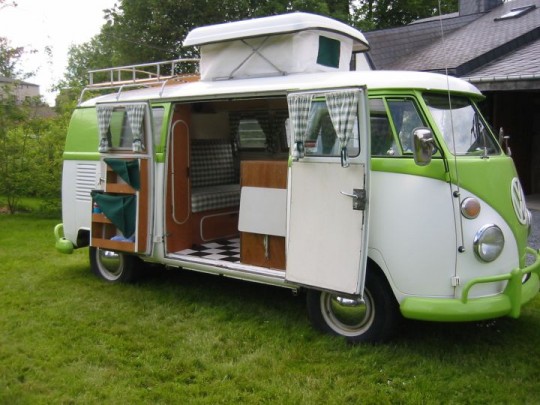
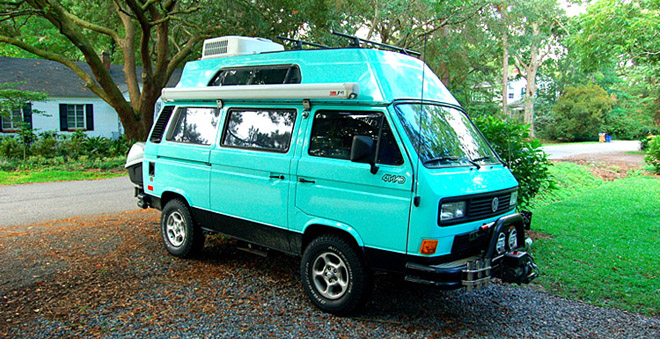
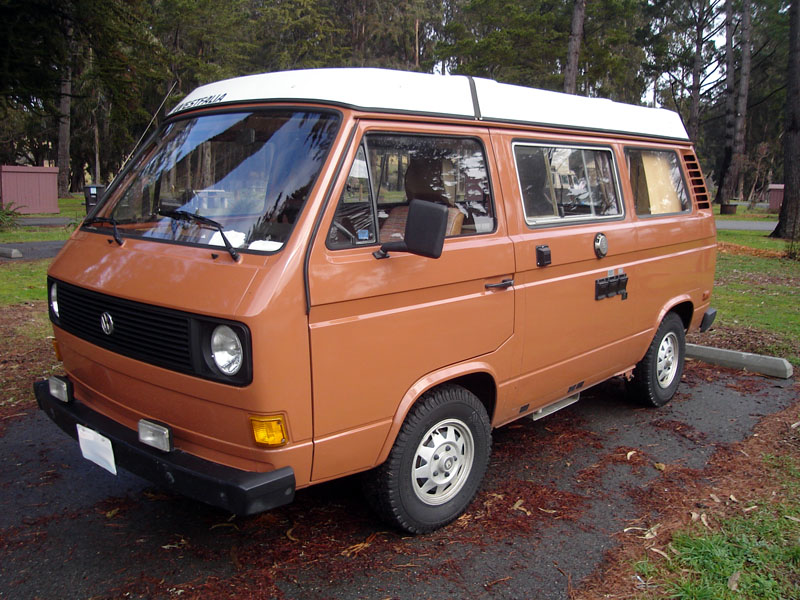
The Volkswagen Westfalia Camper is a camper conversion of the VW bus. The name originates from the company Westfalia-Werke which began converting Volkswagen buses way back in 1951. Originally, the conversions were quite spartan in style but as time went on their famous “pop-top” package was added which provided additional headroom to the van. This became very popular on the second-generation VW Bus from 1968–1979 and is part of its iconic appearance.   In the 1980s the model was called the Vanagon, and the final design was the T4 EuroVan which was discontinued in 2003.  Here are some generational photos of the iconic VW Westfalia in all its different variations.

Like many people I have a great memory about the Westfalia. I vividly remember being about 12ish and learning how to ski with my school chums as we would be shuttled back and forth to the local ski hill on Friday nights in a 1980s era VW Westfalia.  That van had more character than a vintage Rolls Royce and I’m not sure how my friend who is now a Sea King helicopter pilot in the Canadian Navy would always fall asleep on those rides home as the suspension was always working overtime carrying the load of at least 5 teenagers.  That VW bus criss-crossed Canada a few times and took all the abuse two extremely active twin boys as well as an older sister could throw at it. It ended up as a reliable people mover surviving well into our high school years until their old man sold it to another local family who vowed to keep the VW tradition going. It was a shade lighter than this one but similar model.

As the Wesfalia has not been built since 2003, the supply is limited and here in North America they are even more scare and as a result, prices are quite high today.  With many top quality examples being imported from the US there are some more available now than in years past but you better have a thick wallet because they are not cheap.

Vintage Ford Broncos

It does seem like a bit of an anomaly with all the hype around going “green” and getting better gas mileage but let’s be honest there is nothing quite like the smell and sound from a 1970s V8 gas guzzling engine.  That is likely one of the factors contributing to the rise in popularity and value of 1970s Ford Broncos.

The Bronco was initially introduced by Ford in 1966 as a competitor to the small four-wheel-drive compact SUVs of the day which were the Jeep CJ-5 and International Harvester Scout.  It was based on its own platform and was built and sold by Ford until 1996.  Broncos can be divided into two categories: early Broncos (1966–77) and full-size Broncos (1978–96). The early Ford Broncos are now collectors items sought by enthusiasts around the world and can be very valuable if they are in original condition.

With the rise in popularity of these vintage Ford Broncos, one trend becoming popular with the enthusiast community is building an essentially new vintage Ford Bronco to all the original size specifications but with all the bells and whistles of modern auto technology.  This is a recent video courtesy of Adam Carolla’s CarCast where California based builder ICON shows off their latest beautiful handmade Ford Bronco model which comes complete with LED lights, Nike designed front grill and a brand new 5.0 Litre V8 pumping out a whopping 420 HP and 390 lbs of torque.  An incredible machine for the man or woman that has it all.

One celebrity fan of the Ford Bronco is Michigan music legend and outdoorsman, the infamous Ted Nugent.  Check out a video of him ripping it up in his classic 1974 Ford Bronco.

Another beautiful 1976 Ford Bronco for sale in Oklahoma.

If you are interested in checking out more information about Ford Broncos here are some solid websites regarding Ford Broncos.