Canadian Bruno Spengler wins 2012 DTM Drivers Championship

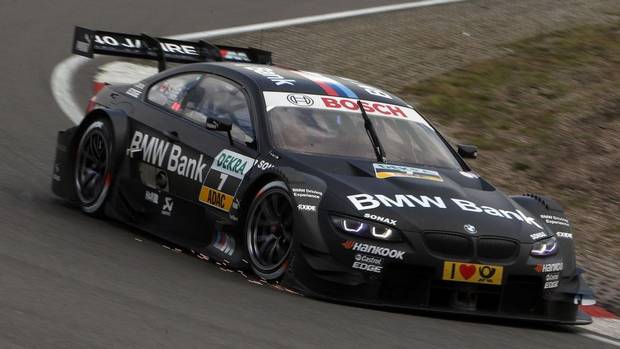
At the wheel of his BMW M3, Bruno Spengler edged out UK’s Gary Paffett at Sunday’s season finale at the Hockenheimring Baden-Württemberg track. With the victory, Bruno clinched the 2012 Deutsche Tourenwagen Masters (German Touring Car Championship). The DTM series is a bit like Germany’s version of NASCAR since the cars are built to go hard and fast while being still rather inexpensive to construct. All DTM race cars have RWD and are powered by 4.0L V8 engines which are air-restricted to 470 hp.

The winning ride

Bruno’s Spengler’s title success capped an incredible season for BMW and Schnitzer, both of whom returned to the championship this year after a 20 year absence. Spengler is the first Canadian to earn the DTM championship, and is only the fourth BMW driver to take the German title.

Source: http://www.autosport.com

Here is a slick video of a day in the life for Bruno along with some recent track highlights.

Tesla Model S vs. BMW M5

While electric vehicles are getting a lot of mixed attention recently, especially around their range, price and business model, one thing that doesn’t seem to get a lot of focus is their performance, especially speed.   Yes, in the Model S you can only go about 300 miles before you need to recharge, but how does it do off the line?

Take a look at the following video of a Tesla Model S ( $97K for Signature Performance Edition) racing against a BMW M5 (starts at $91K).  You’ll notice off the line the M5 wavers a little bit, while the Model S really grips the road.

At the end of the day the instant torque provided by the electric motor seems to give Tesla the edge in this match up.

If you want to learn more about the mechanics behind the Model S check out this video from Car and Driver:


While this video gives a good overview of the M5:

Group C Porsche 962 on the streets of Japan

Take a look at this very well produced short movie of a Porsche 962 driving around the streets of Japan. Although a little bit dated it’s obvious that more than a few heads are turned as the 962 is driven around the urban environment.

The following is a description from the film maker:

“The Group C Porsche 962 is an iconic race car to say the least. In the 80’s it won countless Le Mans races and to this day holds a very special place in car enthusiasts hearts. One particular Japanese car enthusiast loves this car so much that he can’t keep this race car restricted to circuit duties only. He feels the overwhelming need to spend much more time with it, on the streets!”

Classic American Cars in Cuba

From a historical perspective you’ve got to love the old 1950s American cars that are still being driven all over Cuba. The Cadillacs, Packards and De Sotos running around are like a moving museum.

The following are a few links to various collections of pictures and videos of the cars that Cuba is famous for.

Flickr group dedicated to pictures of Cuban cars (about 6,500 photos)

Cuba’s Classic Cars Photo Gallery

Youtube video of the Classic Cars of Cuba

The following article points to a reason why some of these classic vehicles may start disappearing in Cuba. As of last year Cubans are now able to buy and sell vehicles of all ages (not just pre-1959 models). While the car buying process in Cuban won’t be the same as Europe or North America, it’s a step that’s probably very welcomed in the country. Let’s hope, however, those American classics keep on rolling for many years to come.

MINI Pulls Out of World Rally Championship (WRC)

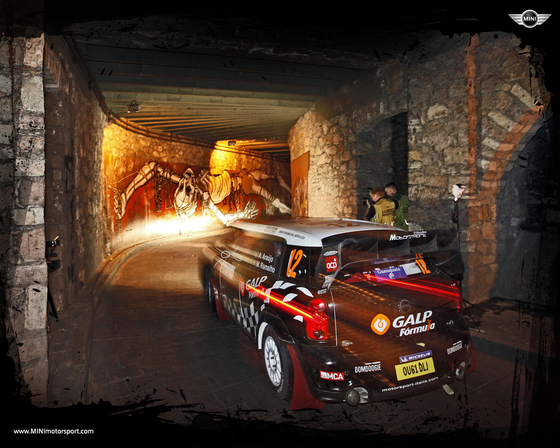
MINI John Cooper Works                         (Source: http://www.minimotorsport.com)

News yesterday that MINI has pulled out of the World Rally Championship (WRC). Dr. Kay Segler, Senior Vice President MINI Business Coordination and Brand Management indicated:

“MINI will abandon its works involvement in the WRC at the end of the 2012 season. By the end of the season WRC Team MINI Portugal will have competed in every rally in 2012. As such, in accordance with FIA regulations, we will have achieved the WRC homologation for the MINI John Cooper Works. In doing so, we would have achieved the prerequisites to allow those interested to continue to run the car in the WRC on a customer rallying basis.”

While MINI is pulling out, that latter part of the statement indicates privateer racers, those that are not backed by an automaker, will be able to race in the MINI John Cooper Works.  However, notable rally driver Ken Block has previously stated the World Rally Championship format hurts privateer drivers.

The absence of MINI in the 2013 season may not be a complete surprise. During the 2012 season the team garnered only 26 manufacturer points against 388 from the overall winner Citroen Total World Rally Team. With the absence of MINI, the 2013 WRC season will be left with four main manufacturer teams, Ford, Citroën, Hyundai and Volkswagen.

MINI WRC Team

MINI John Cooper Works

RedlineNorth in New York City

At the end of September, Team RedlineNorth headed to New York City for some eating, drinking and sightseeing. Of course, no trip would be complete without us trying to capture a glimpse of the Big Apple’s auto landscape. We saw a wide range of different cars in Manahattan along with the ubiquitous taxi cabs which are now mostly Ford Escape Hybrid and Toyota Prius models. Here is a very brief view into some of the more interesting autos in Manhattan.

Chrysler 300 Limo NYC style

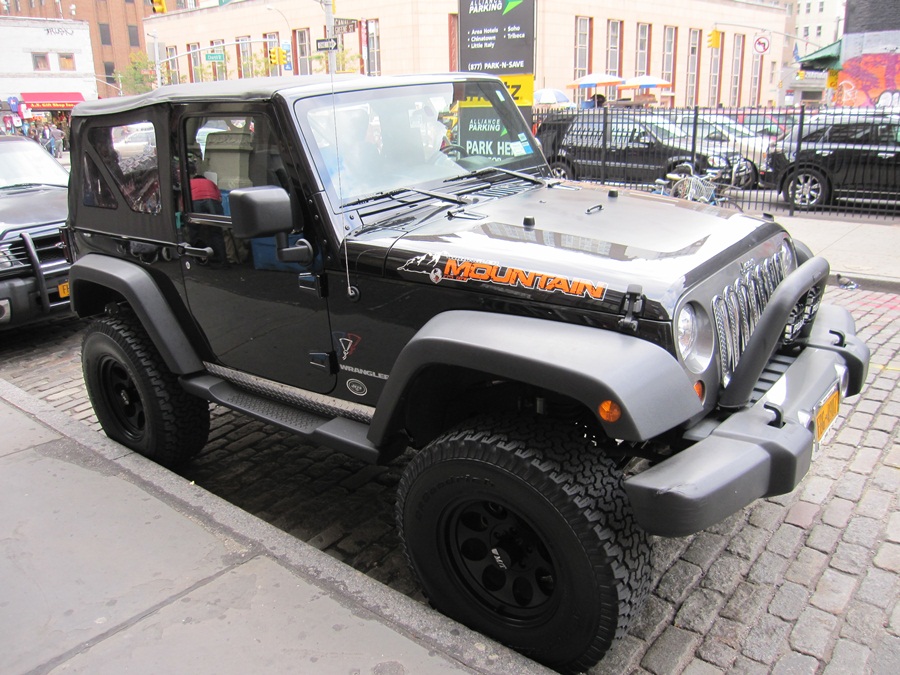
Jeep Wrangler with brush bar and big tires

Parking Garage NYC Style

Ferrari 458 Italia

Ferrari 458 Italia

Ferrari 458 Italia with Montana plates

Manhattan Maserati

Window shopping

More NYC Style Parking

Sebastien Loeb wins World Rally Championship (WRC)

Yesterday, Sebastien Loeb won his home Rally of France clinching the World Rally Championship for a record ninth consecutive time.  With two events still remaining, Sebastien’s lead in points was so large he won the title mathematically before the season is finished.

Sebastien Loeb wins big

The 38 year Frenchman’s first title came in 2004 and he has been crowned drivers’ champion every season since then. With over 75 victories since 2002, his domination is truly unmatched in the sport and he is one of the greatest rally drivers in history.

Sebastien drives the Citroen DS3 WRC which is based upon the Citroën DS3 road car. The DS3 WRC though is powered by a turbocharged 1.6-liter engine rather than the normally aspirated 2-liter engine found in most Super 2000 cars.

To see him in action check out this video – He truly is a magical driver.

Unfortunately for fans, Sebastien will not be defending his 9th championship next year in WRC as it has been announced he will be switching to the World Touring Car Championship. It will be interesting to see if he can make the transition and bring his unparalleled success to the new series in the future.

Growing Number of Automatic Transmission Speeds

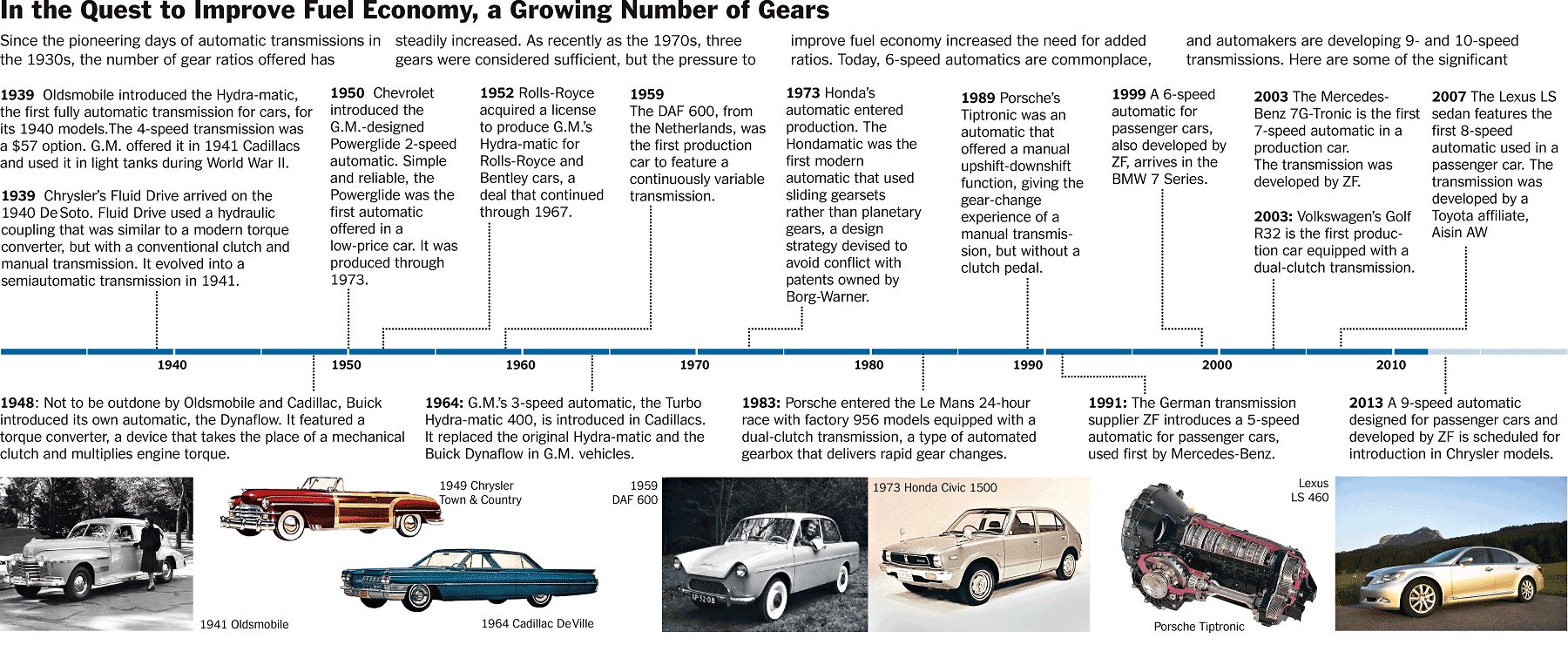
In case you didn’t catch it, the New York Times auto section recently had an interesting article on how the number of speeds in the automatic transmission has increased over the years. In the 1980s four speed gearboxes were the norm, which increased to five and six speeds in the 1990s, to more recently Chrysler planning to offer a 9 speed automatic starting in 2013.

The article explains how more stringent fuel efficiency regulations are increasingly driving up the number of speeds being introduced into automatic transmissions and why, for example, the Ford Fiesta and the Chevy Sonic (previously reviewed by RedlineNorth) have the same fuel efficiency as the larger Ford Focus and the Chevy Cruze (hint: it’s a function of available space).

It’s important to note that a lot of efficiency can still be squeezed out of the existing internal combustion engine. This opportunity is one of the main arguments that some auto manufacturers use when explaining why they have not developed their own electric vehicle or other alternative fuel models. Of course, the efficiencies derived from engine improvements can get applied in a variety of ways from increasing the horsepower and weight of the vehicle, to increasing its fuel efficiency, and usually in that order.

One could argue it is only when manufacturers are given an ‘incentive’ to increase fuel efficiency, such as through regulations, that the benefits of engine improvements get applied to overall vehicle fuel efficiency. It’s never that simply however.

The Times article also touches upon the immense amount of research and development required to develop new transmissions and how automakers are trying to reduce, or share, their investment and risk in transmission development through joint partnerships, such as between GM and Ford.  What seems certain is that more and more passenger vehicles will enter the market in the near future with an increasing number of transmission speeds.

The following infographic from the New York Times article provides a good overview how the number of gears has increased over time.

Increasing number of gears (Source: New York Times)

Sources: New York Times, Reuters Canada, US DOE, Car and Driver and egm CarTech

2013 Chevrolet Equinox

With the seasonal equinox just behind us, it seems like a great time for Team RedlineNorth to review the 2013 Chevrolet Equinox. During a week of extreme weather differences we drove GM Canada’s tester on the highways and back roads of Southern Ontario.
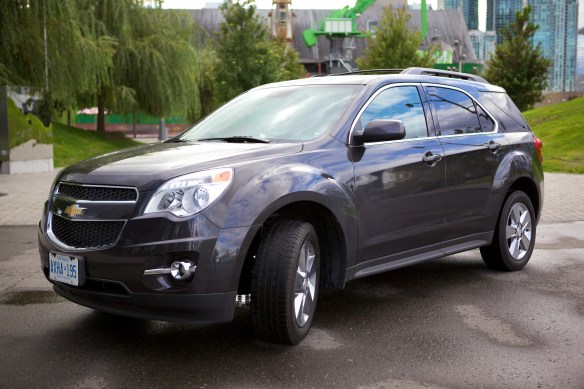
2013 Chevy Equinox LT

Overview

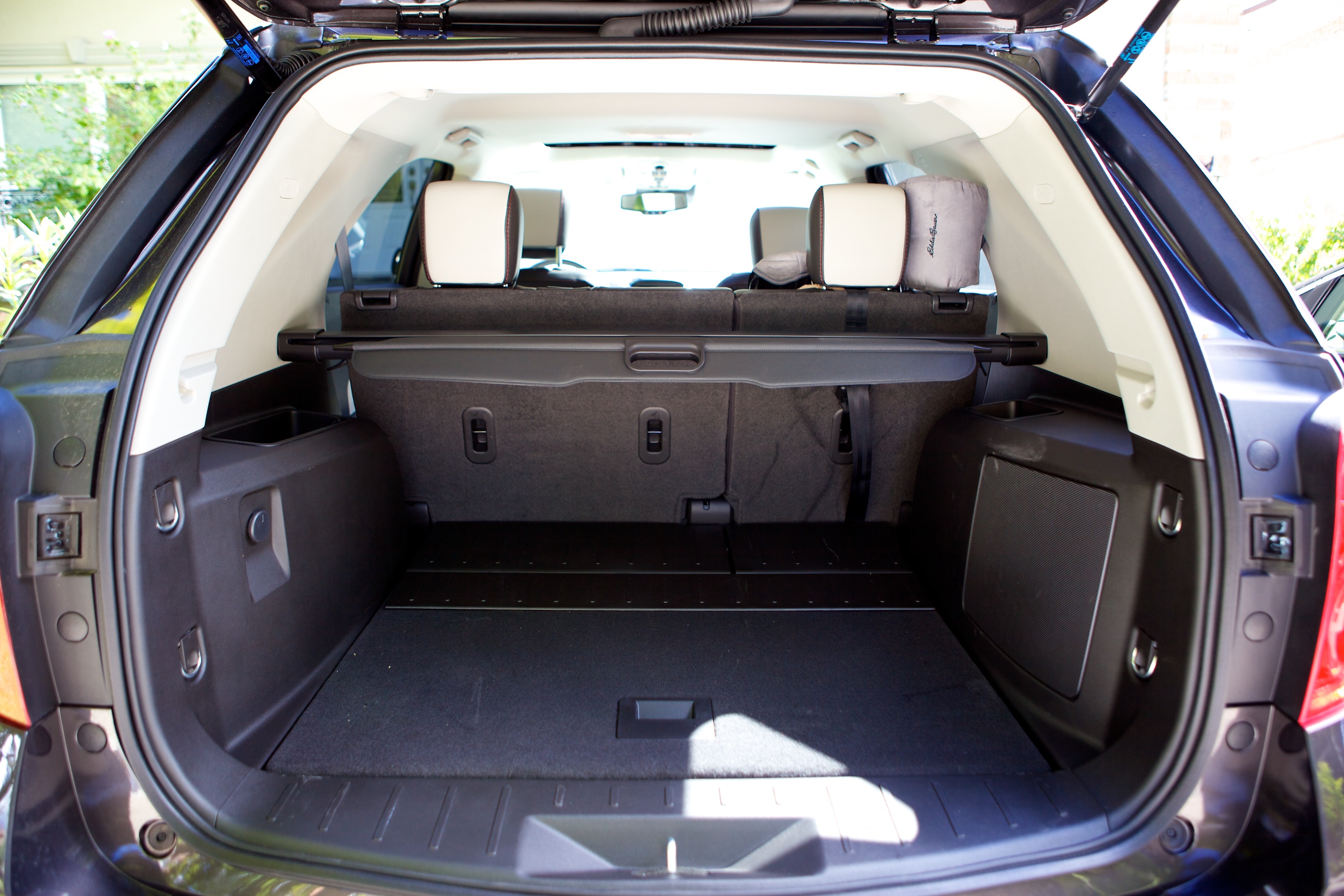
Our first impressions of the Equinox are that it is a very safe, easy to drive and solid SUV. Designed as a true kid-hauler and grocery getter, the 2013 Equinox provides a ton of cargo room.  With the seats pushed forward, cargo capacity is a generous 31.4 cubic feet and with the seats folded flat, cargo capacity increases to a massive 63.7 cubic feet. Similarly, the front seats provide ample head and leg room while the back seats provide a spacious amount of leg and hip room along with a nicely appointed centre fold down armrest.

Our 2013 Chevrolet Equinox review vehicle came in the LT (AWD) trim package which includes the following features:

  • 3.0L DOHC V6 VVT with  264 HP @ 6950 rpm
  • Torque – 222 lb. ft. @ 5100 rpm
  • 6-speed automatic with overdrive and Driver Shift Control
  • 6 airbags
  • Leather heated driver & front passenger seats
  • 8-speaker, 250-watt premium Pioneer® sound system with subwoofer
  • OnStar® with 6 months of the Directions & Connections Plan, Turn-by-Turn Navigation and OnStarRemoteLinkTM
  • Air conditioning, keyless entry, power windows, locks and mirrors, cruise control, SiriusXM Satellite Radio, USB port and auxiliary audio input jack, and Bluetooth: hands free phone and audio connectivity.
  • Power rear liftgate
  • Rear vision camera with display in radio screen
  • GM’s new lane departure warning and forward collision alert system
  • 17 inch painted aluminum wheels
  • Trunk/storage space – 31.4 cubic feet with seats folded forward or 63.7 cubic feet with seats folded flat – based on GM Canada’s vehicle information
  • Chevrolet MyLinkTM – includes personal media connectivity by Bluetooth® to vehicle audio system; voice-activated technology for audio, phone, phone book and music selection; Stitcher SmartradioTM app to listen to talk radio, podcasts and live radio through your smartphone; picture viewer; Playlist and Album Art powered by Gracenote®
  • $31,025 CAD MSRP from GM Canada’s website as of October 2, 2012 ($26,445 for LS entry trim level) * Prices based on 2012 model
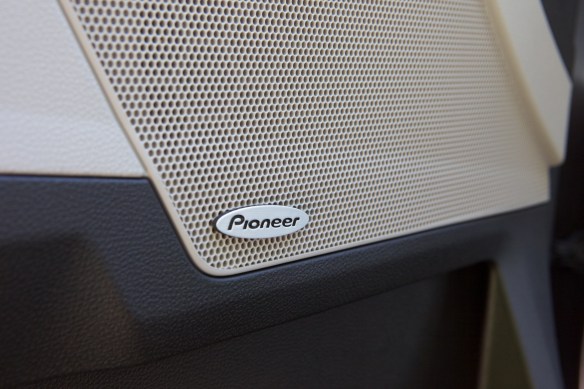
Pioneer Sound System with 8 speakers and subwoofer

Interior

Interior appointments are of a high quality as our test vehicle came with a classic white leather seating package and the cabin included a very sleek dash and entertainment console.  Our only compliant was around the quality of some of the plastic on the doors and dash.

Safety

The lane departure and collision avoidance warning systems worked well

The lane departure warning and forward collision alert systems were both used extensively during the test period and worked as advertised.  We appreciated the ability to adjust the collision alert system tolerance from alerting the driver at three different distance settings. In addition, the inset convex portion of the side mirrors provided an additional angle of view while overtaking on the highway which is a nice feature. The rear vision camera system was also used extensively in parking lots and is a great option due to the limited rear view visibility. Finally, the hill start assist feature, while strictly not a safety feature, was welcomed when exiting underground parking garages and worked well with no perceivable rollback.

Handling

The Equinox engine felt responsive for an SUV, providing quick acceleration on the highway and overtaking with ease. We tested out the Drive Shift Control, which allows the driver to up and down shift at the touch of the button.  However, like most ‘manual’ modes of automatic transmissions it didn’t really replace the feel of a manual transmission.

We drove the Equinox in both city and highway environments and our overall fuel economy average for the week was 11.9L/100 KM.  The city driving really affected things as the 3.0  engine naturally gets a bit thirsty in Toronto’s stop and go traffic.  However, we found the real time feedback on fuel consumption helped moderate our driving behaviour to maximize overall fuel economy.

Convenience

The Equinox had a number of convenience features that helped round out the overall driving experience. We really appreciated the ability to automatically adjust the opening of the rear trunk between three quarters to fully open at the turn of a dial.

While real time fuel efficiency statistics such as, current range and average fuel economy are nice to have, they were somewhat buried within the menu system and required multiple button presses to access.  It would likely be useful for this information to be displayed on the larger navigation screen.

Lastly, the arm rest storage space was more than ample and an interior light is provided to light up the console area to help you find what you are looking for.  In addition, a USB port and 12 volt charging outlet are also included in the arm rest compartment.
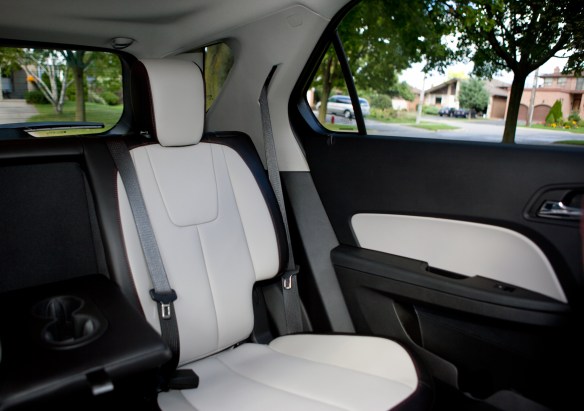
Ample rear seating

Competition

With so many competitors in the tightly battled smaller SUV/CUV space, GM certainly has their work cut out to make sure they continue to get their slice of the consumer pie. However, the 2013 Chevrolet Equinox remains very strong among its peers and is definitely worth a look if you are in the market for a smaller SUV/CUV.

Some of the other nameplates in the segment which will challenge GM for buyers are the Ford Escape, Nissan Rogue, Toyota RAV4, Kia Sportage, Hyundai Tuscon, Honda CR-V and Mazda’s CX-5.

Coyote Speed Camera Warning System

Coyote is a subscription based speed camera alert service used by over 1.7 million people in Europe. It uses crowd sourced information from other Coyote users to warn drivers against fixed and mobile speed traps. Coyote goes beyond other traffic focused apps by giving subscribers additional services, such as indicating when your vehicle enters an average speed zone allowing you to make real time speed adjustments by calculating your average speed in the area.

Dashboard Mounted Coyote

Screen Shot

As with all crowd sourced based applications the larger the user base, the more likely the information will be accurate, timely and beneficial to the end user. This is where Coyote’s user based of 1.7 million customers certainly provides a leg up to other systems and is a product worth considering for customers in the 28 European countries the service is offered.  The cost of the Mini Coyote V2 device in the UK for example, including a 12 month subscription is £185.00 (including VAT).

The proliferation of these types of smart phone applications, or purpose built devices, does beg the question as to whether they ultimately provide safer roads, or simply allow people break the law?

On the one hand by knowing the specific location of a speed trap the majority of drivers will slow down, which is the intended purpose of the trap in the first place.  On the other hand, drivers may simply take another route and continue to drive above the speed limit, or in an aggressive manner.

Whichever side of the debate you fall on, technology will continue to be used to notify drivers of speed trap locations and police forces and governments will continue adjust their tactics as a result.