Japan’s car culture

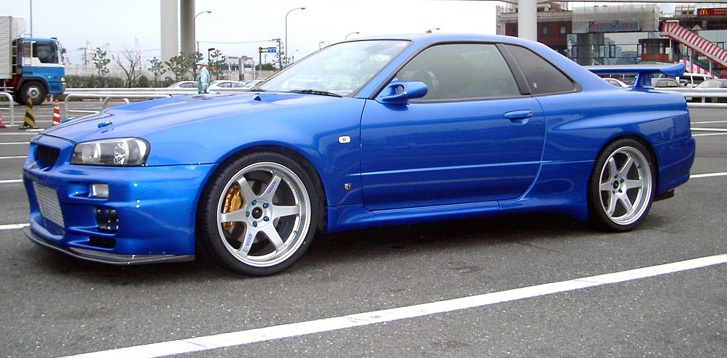
Until 2004 in Japan, all domestic autos were required to have less than 280 HP.  This legislation was set up by the Japan Automotive Manufactures Association as an environmental and safety measure. However, the reality was there were some ways around this restrictive policy. In fact, the main way was the Japanese aftermarket tuner scene since enthusiasts would often purchase a domestic model and then have it modified at a local speed shop right at purchase time if they wanted more horsepower. One of the models which was commonly used was Nissan’s Skyline model, now considered one of the best Japanese sport coupes ever built. It’s legacy and technology can be seen in today’s supercar the Nissan GT-R.

2002 Nissan Skyline R34 GT-R

2002 Nissan Skyline R34 GT-R

In addition, imported cars were not subject to the legislation so many enthusiasts purchased European or North American cars as an open loophole. The interesting thing that resulted from the legislation was Japan became a car focused culture where horsepower was truly appreciated.

Many of these imported foreign models were purchased by the tattooed class of Yakuza gangsters or Japanese mafia who could be seen driving around Japan’s cities in their Italian suits and imported cars like this one below.

Typically modified imported Yakuza style car

Typical modified imported Yakuza style car

As Japan is considered the birthplace of the auto racing sport “drifting” it is a good time as any to profile a story we wrote last year on the history of drifting.  Many of the famous drifting cars are now iconic Japanese models which are sought after by enthusiasts all over the world.

Nissan Silva

Nissan Silva

Today in North America, you can easily purchase an older right hand drive model from Japan as a result of all the drifting hype of the last 15 years.

1993 Toyota Supra RWD

1993 Toyota Supra RWD

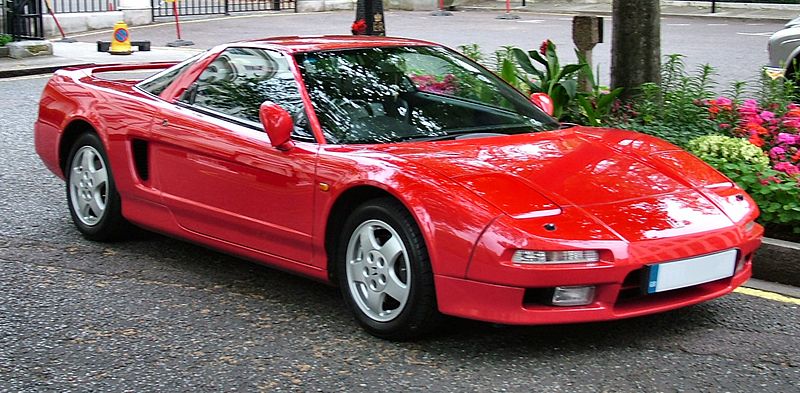
The Honda/Acura NSX

The Honda NSX (sold as the Acura NSX in North America and Hong Kong) is a sports car produced between 1990 and 2005 by Japanese automaker Honda. The NSX is a legend as it possessed supercar characteristics and the latest racing technology all in a street car that could be purchased at your local Honda dealership.   Much of the car’s strong chassis and cornering/handling capabilities were the results of the late Ayrton Senna’s direct input with NSX’s chief engineers.  Honda was very close to Senna as they had powered all three of his world championship-winning Formula One race cars before his death in 1994.

Honda_NSX_red

After studying their main competitors such as Ferrari, Lamborghini and Porsche, Honda engineers designed the NSX in search of the “perfect balance” between usable power and reliability and thus produced a powerful naturally aspirated VTEC engine suitable for the extreme demands of both road and track.

2nd Gen NSX

2nd Gen modified NSX

It was equipped with a mid-engine, rear-wheel drive layout and powered by an all-aluminium V6  engine featuring Honda’s Variable Valve Timing and Lift Electronic Control (VTEC) system.

One of the first magazine articles to chronicle the NSX showed the lightweight 3.0L 270 HP NSX producing a best 0-60 mp/h time of 5.03 seconds and 13.47 seconds for the quarter mile. In addition, a Ferrari 348 to NSX comparison was done with a 0-60 mph time of 5.2 seconds being recorded for the 1991 NSX.

Initially assembled at Honda’s purpose-built Takanezawa R&D Plant in Tochigi, Prefecture in Japan from 1989 to early 2004.  The NSX was assembled by approximately 200 of Honda’s highest-skilled and most experienced personnel, a team of hand-picked staff with a minimum of ten years assembly experience employed from various other Honda facilities were assigned to run the NSX operation.

Amazingly, during this time the local police force had an NSX in their cruiser fleet. Wow, I bet everyone wanted to do overtime driving that around town.

NSX Police car

NSX Police car

Although the last NSX rolled off the assembly line over eight years ago it remains a true classic and Honda engineers are still being praised for its design and innovation. If you appreciate Honda motorsports you need to get to know the NSX.

And to end with, we found this epic video that captures this untamed samurai warrior of a sports car in all its glory.

Ferrari 458 Italia

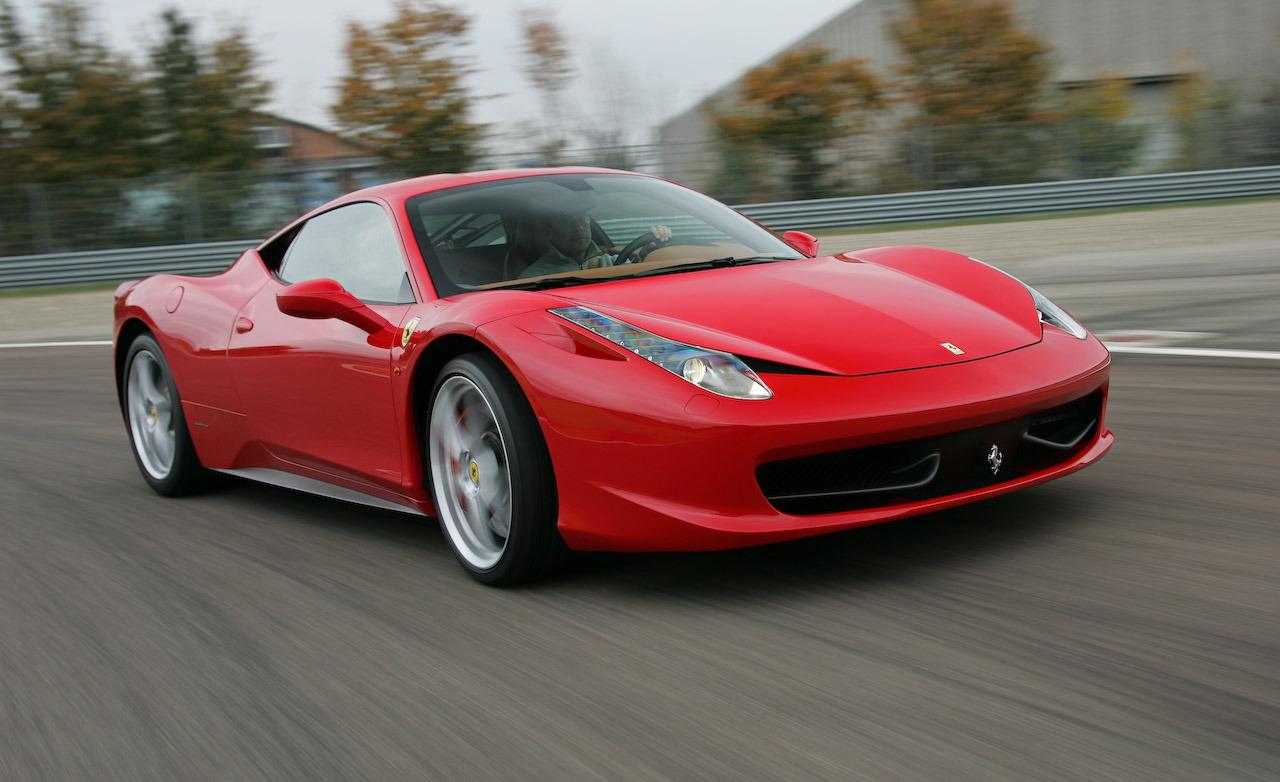
It has been a while since we wrote anything about Ferrari so we thought it was a good time to revisit this ultimate supercar marque.  We will focus on the Ferrari 458 Italia, a mid-engine sports car designed to replace the Ferrari F430. Officially unveiled at the 2009 Frankfurt Motor Show the 458 Italia as been included in the Ferrari line-up since 2010.

2010-ferrari-458-italia-photo-345065-s-1280x782

Powered by a mid engine, naturally aspirated 4.5L V8 producing 562 HP at 9,000 rpm and 398 lb of torque at 6,000 rpm with 80% of the torque available at 3,250 rpm.   Yikes, that is a ton of power and torque for a car tipping the scales at only 1,450 kg /3,197 lb.

Official performance stats from Ferrari are as follows:

  • 0-100 km/h (62 mph) acceleration is under 3.4 seconds
  • Top speed is 325 km/h or 202 mph

2012_ferrari_458_italia_road_test_review_04-1106

In 2011 at the Frankfurt Motor Show, Ferrari unveiled the convertible variant of the 458 Italia called the 458 Spider which features an aluminium retractable hardtop which can be retracted in 14 seconds. The engine cover was also redesigned to work with the retractable roof system. Ferrari plans to sell approx 1,500-2,000 458 Spiders models annually. It has the same 0-62 mph time as the hard-top model but is a tad slower with only a top speed of only 198 mph (319 km/h).  Not much of a sacrifice required to have the benefits of the drop top.

Ferrari_458_Spider

To go along with its amazing looks and performance, the 2013 458’s sticker price stands out among the crowd at approx $269,000 (CAD). After all, this is no ordinary sports car, it’s a Ferrari.

To catch a glimpse of the sheer rawness of the 458 in action, check out the UK’s Chris Harris behind the wheel of a new 458 Spider driving like an “idiot”. Honestly, talk about the most fun possible on four wheels and on a wet track no less. I think he may just have one of the best jobs in the world.

Sources: Wikipedia and Ferrari.com

SEAT – Spanish Auto Company

If you live in North America you may not be too familiar with the Spanish company called SEAT S.A. so we thought it would be interesting to take a closer look. Currently, they are the only major Spanish car manufacturer to develop their own cars in-house while also exporting to over seventy countries.

Originally founded on May 9, 1950, by the state owned Instituto Nacional de Industria (INI), it is now a wholly owned subsidiary of the German Volkswagen Group, and marketed with a youthful sporty profile. Its current corporate headquarters are located in the town of Martorell just outside of Barcelona, Spain. The name SEAT, comes from the acronym Sociedad Española de Automóviles de Turismo (Spanish Touring Car Company, in English) however, in 1990 the name was officially changed to SEAT, S.A. 

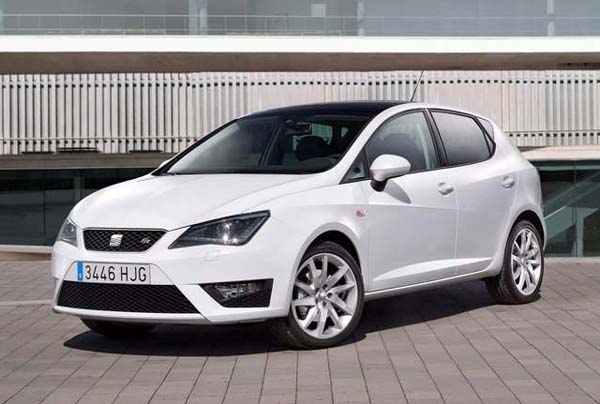
One of SEAT’s recent corporate traditions has been its naming nomenclature which has been inspired directly by Spanish culture. For example, a large number of SEAT’s production models have been named after various geographic locations in Spain such as; Arosa, Ibiza, Córdoba, León, Toledo, Altea, Alhambra, Malaga, Marbella and Ronda.

2013 Seat Ibiza

2013 Seat Leon

However, there have been several exceptions to this rule including the recent example of the SEAT Exeo model name — which was influenced from the Latin word “exire” which means “to go beyond”.

As mentioned, the SEAT brand aims for a youthful and sporty corporate identity which is reflected in all facets of their global marketing. We came across an interesting example of their youthful and sporty focus with this recent TV ad from Russia which has been attracting lots of attention online.  We sure can’t imagine something this style flying in North America anytime soon. Nevertheless, it really is interesting to look at the differences between the various regions in regards to the marketing of the automobile.

Sources: Wikipedia, YouTube, Seat S.A. corporate website.

Consumer Reports: Total Cost of Car Ownership

Consumer Reports have recently published an analysis on the total cost of ownership of a new vehicle over a one, three, five and eight year period.  They have used a number of factors in their analysis including depreciation, fuel, interest on financing, insurance, sales tax, as well as average maintenance and repair costs.

Their analysis has produced some interesting results.  First and foremost the median cost of ownership for a new vehicle is more than $9,100 a year, over a five year ownership period.  Furthermore, the largest single cost in a new vehicle is depreciation, making up 48% of costs in the first five years. This of course assumes that you will be eventually selling the new vehicle down the road and not driving it into the ground.

Consumer Reports Analysis

Courtesy: Consumer Reports.org

The second largest cost is fuel accounting for 24%, while interest on vehicle financing is third with 11%, again over a five year period.

As indicated at the beginning of this post the Consumer Reports analysis is based on a number of assumptions, such as the cost of fuel ($4.20/gallon or $1.11/litre), insurance, interest (6%, 15% down, 5 years – also assumes the vehicle isn’t bought outright at the beginning) and sales tax (5%) to name a few.

All of their assumptions are reasonable and necessary for a broad based analysis, but can vary widely across different jurisdictions. One should keep this in mind when reading the results.

Nonetheless, based on their analysis, the least expensive car to own is Toyota Prius which costs just $5,000 a year to own for five years.  While the most expensive vehicle in the list is the BMW 750Li at a whopping $21,500 a year, for a five year period.

A complete breakdown on the ownership cost per model can be found below.

For a more in depth analysis, including further details on the assumptions used and how that may relate to your situation read the complete article here.

Ownership Costs by Vehicle
(Source: Consumer Reports)

Lowest cost Highest cost
Make & Model Cost/year over 5 years Make & model Cost/year over 5 years
Small cars
Toyota Prius C $5,000 Mitsubishi Lancer ES $7,000
Toyota Corolla Base 5,250 Mazda3 Hatchback 7,000
Honda Fit (base) 5,250 Nissan Sentra 2.0 SL 7,000
Smart ForTwo 5,500 Ford Focus Hatchback 7,000
Honda Fit Sport 5,500 Kia Soul 7,000
Mazda2 (MT) 5,500 Kia Forte Hatchback 7,000
Scion xD (MT) 5,500 Kia Forte Koup 7,250
Toyota Yaris Hatchback 5,500 Chevrolet Cruze 1.4T 7,250
Scion xD (AT) 5,750 Suzuki SX4 Hatchback 7,500
Toyota Corolla LE 5,750 Chevrolet Cruze ECO 7,500
Family sedans
Toyota Camry Hybrid 6,500 Toyota Camry (V6) 8,250
Volkswagen Passat TDI 6,500 Ford Fusion (V6, FWD) 8,250
Toyota Camry (4-cyl.) 6,750 Chevrolet Impala (3.6) 8,250
Hyundai Sonata Hybrid 6,750 Nissan Altima (V6) 8,500
Hyundai Sonata (2.4) 6,750 Subaru Legacy 3.6R 8,500
Honda Accord (4-cyl.) 6,750 Chrysler 200 (V6) 8,500
Ford Fusion (4-cyl.) 7,000 Kia Optima 2.0T 8,750
Mazda6 (4-cyl.) 7,000 Ford Fusion (V6, AWD) 8,750
Nissan Altima (4-cyl.) 7,250 Mazda6 (V6) 9,000
Subaru Legacy 2.5i 7,250 Volkswagen Passat (V6) 9,250
Upscale & luxury cars
Lexus CT 200h 7,750 Lincoln MKS AWD 13,000
Buick Verano (2.4) 7,750 BMW 535i 13,250
Audi A3 2.0T 8,000 Mercedes-Benz E350 13,500
Buick Regal (2.4) 8,000 Jaguar XF 13,500
Acura TSX (4-cyl.) 8,250 Hyundai Equus 14,000
Buick Regal (turbo) 8,500 Lexus LS 460L 16,000
Buick LaCrosse eAssist 8,750 Jaguar XJL 19,000
Infiniti G25 Sedan 9,000 Audi A8 L 20,000
Toyota Avalon 9,000 Mercedes-Benz S550 20,500
Volkswagen CC 2.0T 9,000 BMW 750Li 21,500
Lowest cost Highest cost
Make & Model Cost/year over 5 years Make & model Cost/year over 5 years
Small SUVs
Toyota RAV4 (4-cyl.) $7,000 Subaru Forester 2.5XT (turbo) $8,250
Honda CR-V 7,250 Nissan Xterra 8,750
Nissan Juke 7,250 Mitsubishi Outlander (V6) 9,000
Mitsubishi Outlander (4-cyl.) 7,500 Kia Sportage (2.0T) 9,250
Hyundai Tucson (2.4) 7,500 Volkswagen Tiguan 9,750
Midsized SUVs
Hyundai Santa Fe (4-cyl.) 8,000 Dodge Journey V6) 10,750
Chevrolet Equinox (4-cyl.) 8,000 Nissan Pathfinder (V6) 10,750
GMC Terrain (4-cyl.) 8,000 Ford Explorer (V6) 11,250
Kia Sorento (4-cyl.) 8,250 Jeep Grand Cherokee (V6) 11,250
Jeep Liberty 8,500 Jeep Grand Cherokee (V8) 12,750
Large SUVs
Ford Flex (V6) 10,500 Dodge Durango (V8) 13,500
GMC Acadia 10,500 Ford Expedition 14,000
Chevrolet Traverse 10,500 Chevrolet Suburban 14,000
Ford Flex (EcoBoost, V6) 11,750 GMC Yukon XL 14,250
Dodge Durango (V6) 12,250 GMC Yukon (5.3) 15,000
Upscale/luxury SUVs
BMW X3 (3.0) 10,250 Mercedes-Benz ML350 14,250
Land Rover LR2 10,500 Land Rover LR4 14,250
Infiniti EX 10,500 Mercedes-Benz GL350 BlueTec 15,000
Audi Q5 3.2 11,250 Porsche Cayenne (V6) 15,250
Lexus RX 350 11,250 Infiniti QX56 15,500
Buick Enclave 11,250 Lincoln Navigator 15,750
Volvo XC60 11,500 Toyota Land Cruiser 16,000
Mercedes-Benz GLK350 11,500 Land Rover Range Rover Sport 16,250
Land Rover Range Rover Evoque 11,500 Mercedes-Benz GL450 16,500
Acura MDX 11,750 Cadillac Escalade (base) 17,250
Lowest cost Highest cost
Make & Model Cost/year over 5 years Make & model Cost/year over 5 years
Minivans & wagons
Toyota Prius V $6,000 BMW 328xi Wagon $10,000
Volkswagen Jetta Wagon TDI 6,250 Dodge Grand Caravan SXT 10,250
Volkswagen Jetta Wagon SE 7,500 Kia Sedona 10,500
Mazda5 7,750 Nissan Quest 10,500
Subaru Outback 2.5i 8,000 Chrysler Town & Country 10,750
Sporty cars & convertibles
Mini Cooper Hatchback Base 5,750 Lexus IS 250 Convertible 11,000
Honda CR-Z 6,000 Subaru Impreza STi 11,000
Fiat 500 Sport 6,000 Chevrolet Camaro Convertible SS 11,000
Volkswagen Beetle 2.5 6,500 Mitsubishi Lancer Evolution 11,250
Fiat 500 C 6,500 BMW 328i Convertible 11,750
Mini Cooper Hatchback S 6,500 Audi A5 2.0T 11,750
Scion tC 6,500 Infiniti G37 Convertible 11,750
Hyundai Veloster 6,750 Chevrolet Corvette Base 12,750
Kia Forte Sedan 6,750 Chevrolet Corvette Z06 14,500
Honda Civic Si 7,250 Jaguar XK 19,000
Pickup trucks
Toyota Tacoma (V6) 8,500 Chevrolet Avalanche 13,000
Chevrolet Colorado 9,250 Dodge Ram 2500 Turbodiesel 13,750
Nissan Frontier 9,250 Ford F-250 Turbodiesel 14,000
GMC Canyon 9,500 GMC Sierra 2500HD Turbodiesel 14,250
Honda Ridgeline 9,500 Chevrolet Silverado 2500HD Turbodiesel 14,25

Old American muscle becomes new again

Here is a really good read about making the old, new again.  The Globe and Mail’s Peter Cheney captures the feeling of the wind and exhaust roar from the lost majesty of golden-age Detroit. He describes his recent adventures while driving on the back roads in Georgia, USA in a 1967 Pontiac GTO convertible which has been updated with the ultimate in modern aftermarket upgrades.  In keeping with the American muscle theme, wanted to share an amazing 1970 Pontiac Firebird worth talking about.  As a daily driver, I’m not where you would be able to showcase all 1200 horsepower from the twin turbos but it sure would be fun trying.

For those of you into American muscle with all the tricked out technology of today’s cars you need to check out YearOne.  They also have an amazing fleet of car builds which would compliment any classic car enthusiast’s garage.