Ferrari 458 Italia

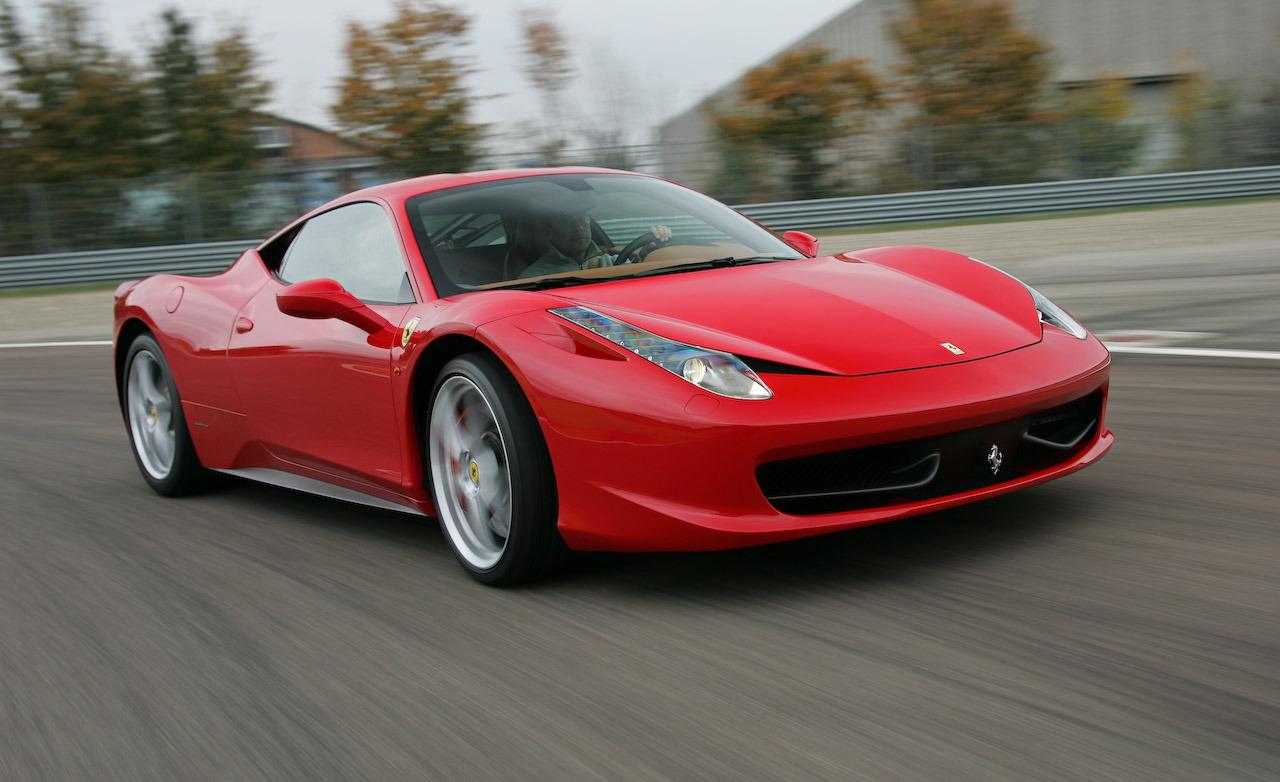
It has been a while since we wrote anything about Ferrari so we thought it was a good time to revisit this ultimate supercar marque.  We will focus on the Ferrari 458 Italia, a mid-engine sports car designed to replace the Ferrari F430. Officially unveiled at the 2009 Frankfurt Motor Show the 458 Italia as been included in the Ferrari line-up since 2010.

2010-ferrari-458-italia-photo-345065-s-1280x782

Powered by a mid engine, naturally aspirated 4.5L V8 producing 562 HP at 9,000 rpm and 398 lb of torque at 6,000 rpm with 80% of the torque available at 3,250 rpm.   Yikes, that is a ton of power and torque for a car tipping the scales at only 1,450 kg /3,197 lb.

Official performance stats from Ferrari are as follows:

  • 0-100 km/h (62 mph) acceleration is under 3.4 seconds
  • Top speed is 325 km/h or 202 mph

2012_ferrari_458_italia_road_test_review_04-1106

In 2011 at the Frankfurt Motor Show, Ferrari unveiled the convertible variant of the 458 Italia called the 458 Spider which features an aluminium retractable hardtop which can be retracted in 14 seconds. The engine cover was also redesigned to work with the retractable roof system. Ferrari plans to sell approx 1,500-2,000 458 Spiders models annually. It has the same 0-62 mph time as the hard-top model but is a tad slower with only a top speed of only 198 mph (319 km/h).  Not much of a sacrifice required to have the benefits of the drop top.

Ferrari_458_Spider

To go along with its amazing looks and performance, the 2013 458’s sticker price stands out among the crowd at approx $269,000 (CAD). After all, this is no ordinary sports car, it’s a Ferrari.

To catch a glimpse of the sheer rawness of the 458 in action, check out the UK’s Chris Harris behind the wheel of a new 458 Spider driving like an “idiot”. Honestly, talk about the most fun possible on four wheels and on a wet track no less. I think he may just have one of the best jobs in the world.

Sources: Wikipedia and Ferrari.com

2013 Hyundai Elantra Coupe

As we begin 2013, it is evident there is lots of new excitement in the Canadian compact car segment with many companies offering more models than in years past. Hyundai Canada is one of these companies bringing to market a trifecta offering of their 2013 Elantra in sedan, coupe and GT models.

Earlier this month, we had the opportunity to get up close and personal with the new Hyundai Elantra Coupe. Aimed primarily at competing with the Honda Civic Coupe and Scion tC, the Elantra Coupe is a real bright spot in the compact car scene with its sleek looks, well refined appointments and stellar pricing.

In spite of its good looks and great value, Hyundai does not anticipate breaking any sales records as they estimate only about 5% of all Elantras sold this year in Canada will be the coupe model. Wow, although interesting from a market segment perspective it’s a bit of shame since the coupe model is a real pleasure to drive in both highway and city environments.

The Elantra Coupe comes in two trim models, the GLS starting at $19,949 CAD with manual transmission and the SE with automatic transmission starting at $25,199 CAD (as tested).

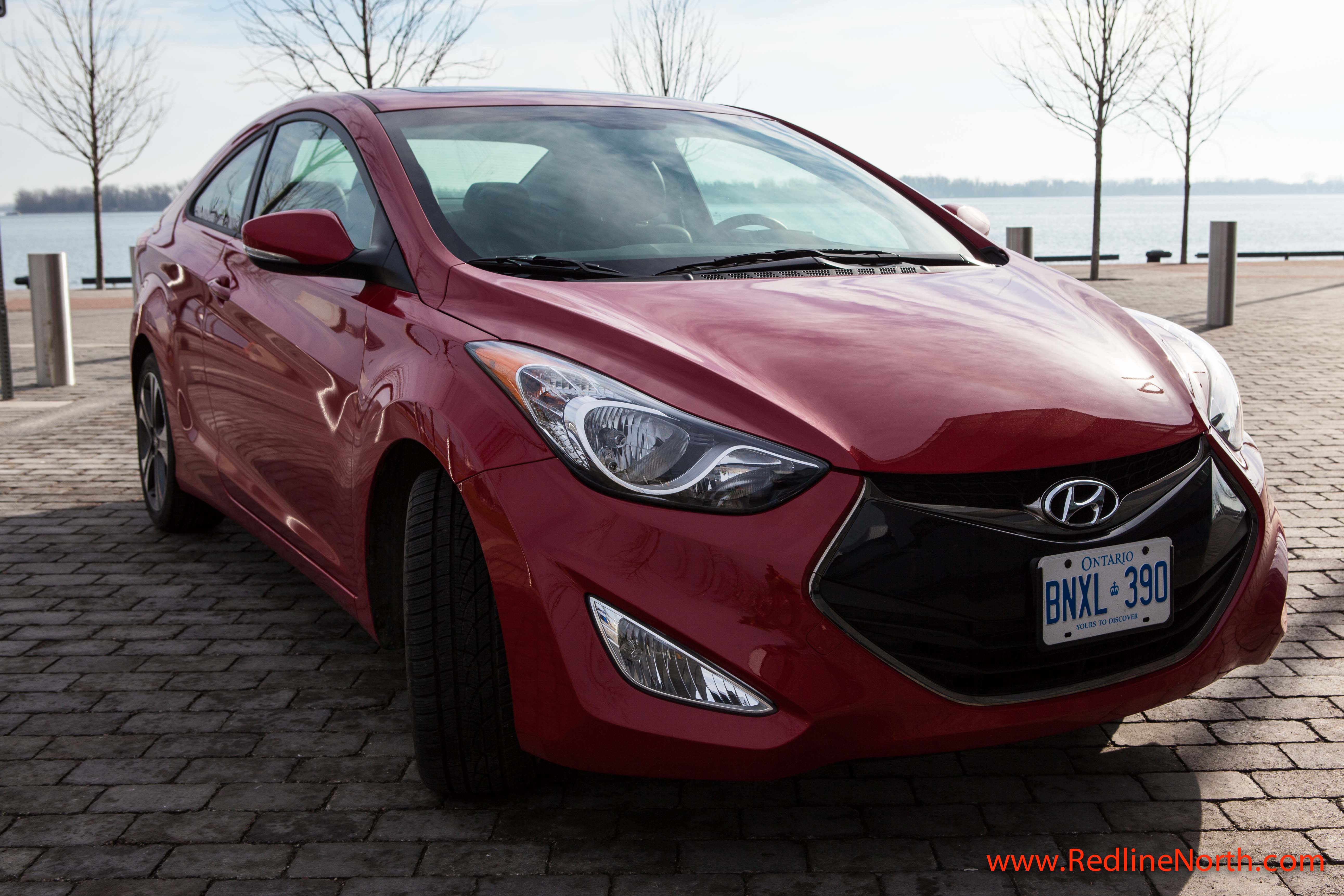
2013 Elantra Coupe

2013 Elantra Coupe

Interior

The interior of the Elantra Coupe SE is very well appointed. The dashboard, infotainment system and climate controls are intuitively located and easy to read and navigate. The SE version of the coupe comes with dual zone climate control, rearview camera and heated front seats, a nice touch for a car in this class. In addition, the machined alloy foot rest, gas and brake pedals lend itself to enhancing the coupe’s sporty look and feel.

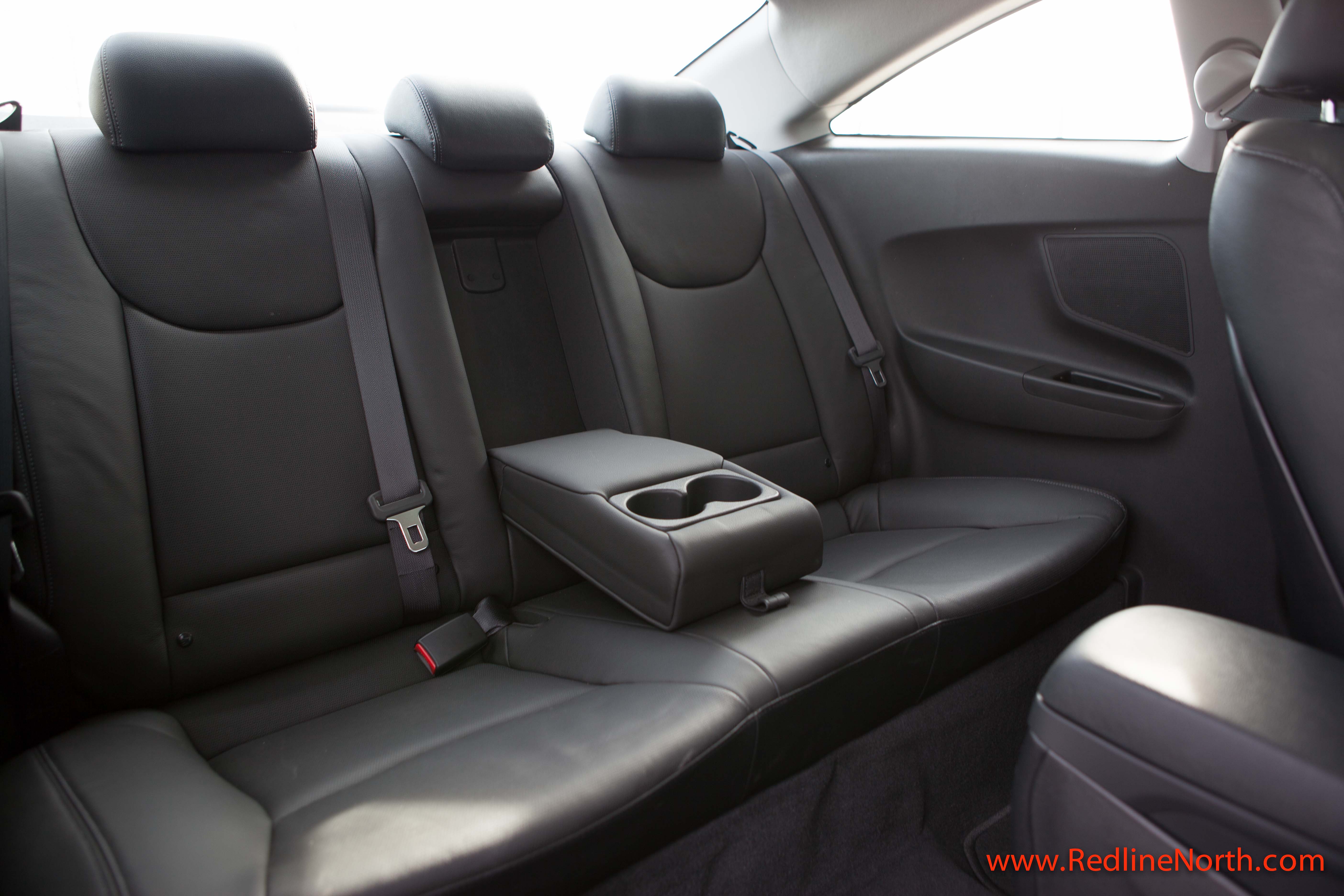
Considering it is a two door coupe, there is surprisingly a fair amount of legroom in the back seats and a nice interior touch is the cup holders in the center arm rest.

Rear seating was surprisingly roomy for a two door coupe

Rear seating was surprisingly roomy for a two door coupe

Interior storage is plentiful with available space within the middle arm rest, doors, below the climate control console and of course the glove box offering plenty of places for keys, phone, wallet/purse etc. The trunk offers a generous amount of room as well, enough even for families driving kids around to weekend sports activities.

Infotainment system in the Elantra Coupe SE

Infotainment system offered plenty of option, however, the speakers could use some improvement

One area that could use some improvement is the quality of the stereo system. While the Elantra Coupe RedlineNorth tested offers satellite radio, CD/MP3 player, USB and auxiliary inputs for iPhones and the like, the music coming from the speakers sounded a bit lackluster and was underwhelming. For a performance focused coupe, Hyundai should consider improving the stereo system in future model years.

Mechanics

Although the coupe felt sporty, with moderate pick up off the line, there was a fair amount of engine noise associated with acceleration. It’s unfortunate the 6 speed manual transmission is not offered with the SE version of the coupe in Canada as it would make a very fun ride even better. Braking was highly responsive as it uses an electronic brake force distribution system that balances braking pressure at each wheel.

2013 Elantra Coupe SE

2013 Elantra Coupe SE

In a nod to saving your pennies at the pump, all automatic transmission models come standard with an optional active eco system that modifies the engine and transmission control to help increase fuel efficiency. In addition, the coupe is equipped with electronic throttle control which improves drivability and fuel efficiency by replacing a conventional cable and linkage setup with much faster electronic hardware.

2013 Elantra Coupe

2013 Elantra Coupe

All this results in the SE version of the Coupe achieving posted fuel efficiency ratings of 7.6L/100km City, 5.3L/100 km Highway and 6.6L/100 km combined. During the test period RedlineNorth experienced slightly higher combined numbers at approximately 7.4L/100km which we felt was reasonable given the mix of city/highway driving over the test period.

Spec Sheet

ELANTRA COUPE SE Auto ($25,199) As tested

Also available is the GLS Auto ($21,149) and GLS Manual ($19,949)

Performance Features

  • City (AT) 7.6L/100km, Hwy (AT) 5.3L/100km, Combined (AT) 6.6L/100km
  • 1.8L Dual CVVT DOHC 16V Engine with 148 horsepower and 131 pound-feet of torque
  • 6-Speed Automatic Transmission with SHIFTRONIC®
  • 4-Wheel Disc Brakes

Safety Features

  • Advanced Front Airbags, Front Seat-Mounted Side Airbags and Roof Mounted Curtain Airbags (6)
  • Anti-Lock Brake System (ABS) and Electronic Brake Force Distribution (EBD)
  • Vehicle Stability Management (VSM), Electronic Stability Control (ESC) with Traction Control System (TCS)

Interior Features

  • AM/FM/XM®/CD/MP3 Player with 6 speakers
  • Air Conditioning
  • Power Windows with Driver’s Auto Down
  • iPod®/USB/Auxiliary input jacks
  • Trip Computer
  • Driver’s Seat Height Adjuster
  • Rear Seat Centre Armrest with cup holders
  • Power Door Locks
  • Cruise Control
  • Centre Console with Storage compartment and Armrest
  • Heated Front Seats
  • Steering Wheel Audio Remote Control
  • Bluetooth® Hands-free Phone System
  • Telescopic Steering Wheel
  • Leather-wrapped Steering wheel / TGS Knob
  • Dual-zone Automatic Temperature Control
  • Alloy Pedals
  • Proximity Key with Push-button Start
  • 7” Touch-screen Navigation System
  • Auto-dimming Rearview Mirror with HomeLink®
  • Rearview Camera

Exterior Features

  • 17” Alloy Wheels
  • Tinted Glass
  • Dual Heated Power Exterior Mirrors
  • Fog Lights
  • Roof-mounted XM® Antenna
  • Power Sunroof
  • Solar Control Glass
  • Automatic Light Control
  • Mirror-mounted Turn Signal Indicators

Competitors

The key players currently competing with the 2013 Hyundai Elantra Coupe for Canadian buyers include the Honda Civic, Scion tC and Kia Forte Koup. All of these coupes are relatively similar in design, engine output and price making for a very tight field overall in 2013. However, the Hyundai Elantra Coupe stands out as a top contender with its unique style, high level of fit and finish and overall value. As a result, anyone looking for a new compact coupe needs to take a close look at the 2013 Hyundai Coupe.

We look forward to reviewing the other models in the Elantra trifecta in the coming weeks so be sure to continue to check back with us.

Noble Automotive

One company widely known among collectors and car enthusiasts is UK based Noble Automotive.  Established in 2001, with the release of its acclaimed M12 model which received high praise from the international motoring press for its incredible ride, precise handling and impressive power.2002_Noble_M12_002_7084

The Noble M12 is a two-door, two-seat model, originally planned both as a coupe and as a convertible.  All M12s were powered by a twin turbocharged version of the 3.0L Ford Duratec V6 engine (Yes same block as in my 2008 Ford Escape who knew?). Of course the engine is totally rebuilt and tuned to a max power of 425 hp at 6500 rpm, with 390 lb·ft of torque at 5000 rpm. Along with forged pistons, an oil cooler, a larger baffled oil sump and extra cooling ducts used to maintain its durability at high rpms. As for the body construction, the M12 has a full steel roll cage, steel frame, and fiberglass composite clam shell body parts.

These famed “Ferrari killers” are extremely lightweight and stiff and although developed more for the track, the M12 performs very well on both road and track. This is largely achieved by having no anti-roll bars on the car which enables the suspension to be stiff yet comfortable. Check out a UK based review of the model from back in the day.

In 2006 the company was sold to Peter Dyson, a successful business entrepreneur and collector of exotic cars. As an M12 owner and a huge admirer of both Noble Automotive and the M12’s attributes he had a vision for the company.  He felt the cars in his collection that gave him the most joy and rewarding driving experience, tended to be the “earlier” models, none of which featured computer assistance. The current supercar offerings of that day just did not reward the driver in quite the same way. So his idea was to produce a modern supercar that replicated this “analogue” inspired driving style of computer technology “purity”.

This challenge led to the development and launch in 2010 of the Noble M600 supercar. Handbuilt in Leicestershire, England, the Noble M600 is constructed from stainless steel and carbon fibre and uses a twin turbocharged Volvo V8.

800px-Noble_m600_Goodwood_festival_of_speed_2010

Although the M600 uses the Volvo V8 powerplant from the Volvo XC90 and S80 models, its V8 includes twin Garrett turbochargers that increase the horsepower to supercar levels. Another very unique technical feature is the prescence of a military style switch taken from the British Tornado jet fighter.  The switch is used to provide choice for the driver between the three performace settings including a 450 hp road setting, a 550 hp track setting or an outrageous 650 hp race setting. 

The combination of immense power and lack of an ABS braking system as per Peter Dyson’s vision of building a “pure” supercar, the M600 does make the cause for owners to be skilled drivers. Neverthless, from all real-life accounts, the M600 is quite easy to drive at low speeds around town.

Of course this type of power and technology does not come cheap which is evident with the M600’s current sticker price of £200,000 in the UK or $330,000 in the United States.  In addition, with production numbers of 50 per year you may still have to wait a while to get one even if you have the money.  Oh dear, the difficulities and hardship of being part of the 0.01%…..

The Noble M600 performance numbers are 100% supercar legit and having one of these cars will make you the envy of any auto enthusiast.

Here are the track numbers broken down:

  • 0-60 mph (0–97 km/h): 3.0 seconds
  • 0-100 mph (0–161 km/h): 6.5 seconds
  • 0-120 mph (0–192 km/h): 8.9 seconds
  • Standing quarter mile: 11 seconds
  • Standing km: 19.9 seconds
  • Power to weight: 520 HP/tonne
  • Top speed: 225 mph (362 km/h)(according to manufacturer)

Enough of the chatter now, as to fully appreciate the M600 you must experience it on a track so go ahead and watch Top Gear’s Jeremy Clarkson video review from a few years back.

If we were fortunate enough to have a supercar budget this would be at the top of our list for sure.

Sources: Top Gear, Wikipedia and Noble Automotive.

Mazda Miata “Banshee”

Banshee

We just had to do something on the Mazda Miata “Banshee” since anytime you go and jam a V8 engine in a small sports car you are going to get a major reaction from people who either love it or hate it. This example built several years ago by Gearz TV host Stacey David is truly exceptional and is worth taking a closer look at. As kit cars go, this build is at the top of the list in terms of its overall low cost =.tons of power and fun.

The Banshee is built on the platform of the Mazda MX-5, also known as Miata in North America and Eunos Roadster in Japan. Mazda first introduced the model at the 1989 Chicago Auto show as a lightweight, two seat roadster with minimal mechanical complexity. However, along with the simple mechanics of the car came a philosophical style aimed at linking modern Japanese technology with the rich history and flair of the small British and Italian roadsters of the 1960s such as; the Triumph Spitfire, MGB, Fiat 124 Sport Spider, Alfa Romeo Spider and Lotus Elan.

In addition to the Banshee kit, there are other available non kit car options out there including this video of a company in California called Monster Miata which provides customers with the option of swapping the Miata’s factory four cylinder engine for a 5.0L Ford V8.  Yes, the name Monster does do it justice as these Monster modifications transform the lady like Miata into a fire breathing track dragon.

2013 GMC SLT Sierra 2500HD

A relative of RedlineNorth offered to give us a sneak peak of his newly delivered GMC Sierra 2500HD truck. We thought this would be an interesting story for readers since it is quite a different focus from our usual coverage.

Model Specs: GMC 2500HD series, SLT, Crew Cab, 2WD, 6’6″ box

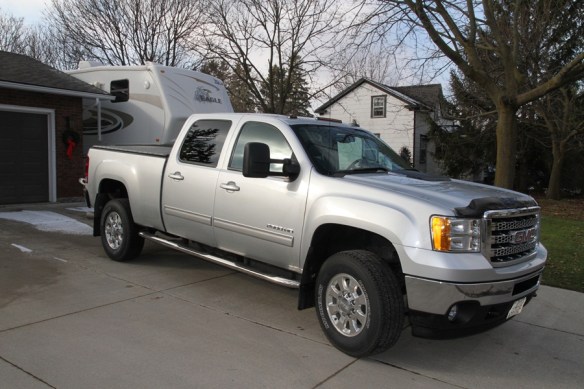
Uncle Don1

The owner and his wife are retired educators and use this “Grand Daddy” of trucks to haul their Jayco Eagle fifth wheel to various locations in the U.S. Sunbelt over the winter months. Based in Southwestern Ontario, Canada they plan to put lots of miles on this rig over the next few years so they decided to go all out with the available bells and whistles.

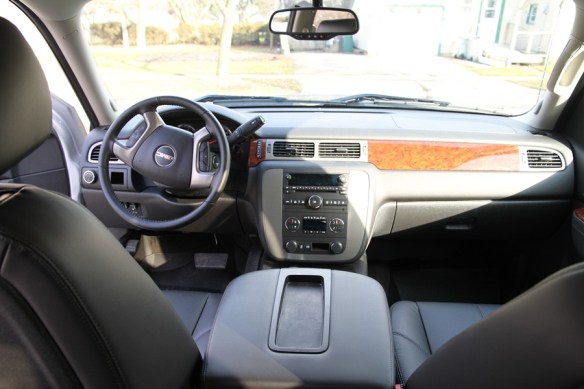
Uncle Don2

Based on the pictures it looks like their annual drive down to the sunny US is more comfortable than watching Sunday afternoon football in most people’s living rooms.

Uncle Don3

Powertrain Specs:

  • Duramax 6.6L turbo diesel engine with 397 hp at 3000 rpm and 765 lb-ft of torque at 1600 rpm (for pulling a Jayco Eagle fifth wheel trailer)
  • Engine can run on B20 fuel – 20 percent biodiesel
  • Smart exhaust brake which (when engaged) will slow the truck on downhill grades   a savings in brake pads and rotors as well as more control when towing our trailer
  • Exhaust is  connected to a special catalytic converter which reduces the oxides of nitrogen to nitrogen gas and water by using a urea based solution or Diesel Emissions Fluid (DEF)
  • Six speed Allison 1000 transmission provides tap-up/tap-down shifting, auto grade braking and a tow/haul mode
  • Eaton locking rear differential permits both rear wheels to benefit from the power transmitted through the system
  • Four wheel disc brakes with 14 inch diameters and twin piston calibers (and the usual ABS) provides more confidence while trailer hauling when emergency or even normal stopping is required.
  • Stabilitrak Electronic Stability Control which detects when a wheel is about to spin laterally and then applies the necessary brake(s) to regain control.
    • This control system provides hill hold assist as the driver’s foot moves from the brake pedal to the gas pedal.

Uncle Don5

Some of the Interior features include:

  • Front, heated, leather Captain seats with 2 position driver memory
  • On-Star communication and assistance service
  • XM Satellite Radio played through a Bose Premium sound system
  • Electric rear window defogger (very useful in a crew cab)
  • Steering wheel controls for radio, Bluetooth and cruise

Exterior features include:

*Some features are aftermarket and did not come from GMC dealer
  • Large, heated camper type mirrors with integrated turn signals and bottom-mounted convex mirrors that are great for monitoring proximity to curbs or trailer tires.
  • Extang tonneau cover to protect cargo and increase fuel economy by reducing wind drag by the tailgate.
  • Line-X coating of the truck box and side rails reduces abrasion by movement of stored items
  • Bug/stone deflector on hood
  • Luverne nerf bars
  • Wheel house linings to reduce noise
  • Cloud-Rider stone guards on all four wheels to protect the front of the trailer as well as the sheet metal of the truck

Many readers may wonder why the owner chose a two wheel drive truck over a 4×4 drive version. Well, there are a couple of reasons why they went the two wheel drive route. Firstly, a front differential adds significant weight, increases maintenance costs, and reduces trailering capacity for both ball hitch and fifth wheel hitch trailering.  Secondly, the owners rarely require the traction ability of a 4×4 wheel vehicle and they appreciate the added fuel economy from the diesel powered 2WD on their long trips to the southern US.

Payload Specifications:

  • GVWR
    4536 kg/10,000 lb
  • Payload
    1378 kg/3037 lb
  • Fifth wheel trailering
    7893 kg/17,400 lb
  • Ball hitch trailering
    5897 kg/13,000 lb

Uncle Don4

Buick Grand National and GNX

Looking back, the American cars of the 1980s were not fast, slick or exciting which was so contrary to the wild life of LA’s Sunset Strip or Miami’s South Beach. We can’t imagine how deflating it must have been pulling up to the club valet in a two ton, V8 powered coupe so suffocated with smog technology it was producing an anemic 140 horsepower.  What a difference from today, where you can walk in to any North American dealership and drive away in a 425+ horsepower rocket ship branded Dodge Challenger, Chevrolet Camaro or Ford Mustang.  Nevertheless, there were two American models from the 1980s that did represent the era’s excess and decadence and that is the Buick Grand National and Buick GNX.

1987 Buick Regal GNX

1987 Buick Regal GNX

The Buick Regal Grand National debuted in 1982 following Buick’s victory of the NASCAR Grand National racing series in 1981 and 1982.  This was an era where manufactures attempted to capitalize on their NASCAR success with the old adage: “What wins on Sunday, sells on Monday”. The 1982 models were not painted black, which may confuse those not familiar with them since they all started out as charcoal grey Buick Regals that were shipped off to a subcontractor for final touches.

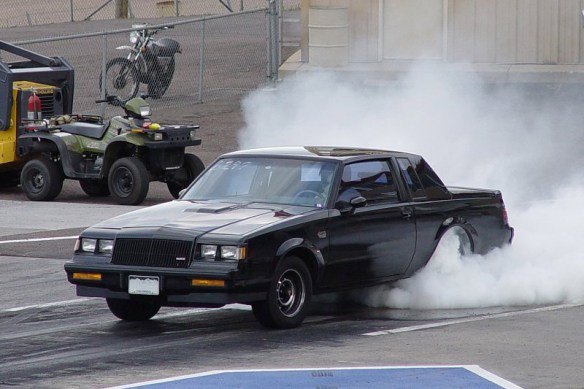
The malevolent burnout

Built to do burnouts

In 1984 the Grand National returned with the all black paint scheme along with the infamous turbocharged 3.8 L V6 which included sequential fuel injection, distributor-less computer controlled ignition, and potent punch of 200 hp and 300 lb·ft  of torque. The power of the engine was improved slightly every year and minor changes cosmetically were made but for the most part the 1984-1986 models look the same.

However, for the Grand National’s final year in 1987, Buick introduced a new model called the GNX priced at a very expensive $29,900. Produced by McLaren Performance Technologies/ASC, Buick underrated the GNX at 276 hp and a very substantial 360 lb·ft of torque. Designed and created to be the “Grand National to end all Grand Nationals.”, changes in the GNX included the addition of a special Garrett T-3 turbocharger with a ceramic-impeller blowing through a more efficient and significantly larger capacity intercooler with a “CERMATEL (Ceramic/Aluminum) coated” pipe. In addition, it was also equipped with a low-restriction exhaust with dual mufflers, reprogrammed Turbo Hydramatic 200-4R transmission with custom torque converter and transmission cooler.

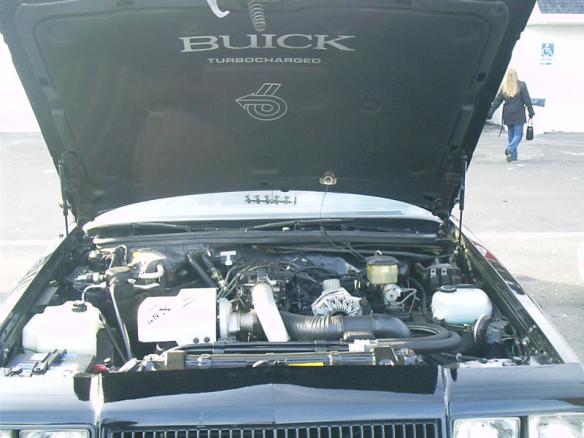
Buick's V6 engine - Way ahead of its time

Buick’s V6 engine – Way ahead of its time

Performance for this Black Knight was measured with a quarter mile time of 13.5 seconds at 102 mph (164 km/h) and a 0-60 mph (97 km/h) time of 4.7 seconds – this was faster than a Ferrari Testarossa and Lamborghini Countach. The GNX really was a “wolf in sheep’s clothing: and auto journalists who tested the car experienced this first hand.  For example, the esteemed Car and Driver editor, Csaba Csere is famously quoted as saying after his first run “the tires, made not the squealing sound…it was a harsher sound, almost like the tread was being ripped off the tires.”

Infamous stance

Infamous stance

Unfortunately, it was a very short run of only five years and consequently the last Grand National rolled off the Buick City assembly line in Flint, Michigan on December 11, 1987.

To mark this somber silver anniversary, a new documentary film has been created called Black Air which details the history of the Grand National from many different perspectives including the enthusiast, the collector, the media and even from those at General Motors responsible for designing the infamous G-body coupe. The film is created in a very doc style, reminiscent of the visceral characteristics the Grand National exuded when it rolled off the line.

From all accounts, the film does a solid job of portraying the story of why this low volume, American muscle car is the object of obsession for many automotive enthusiasts a quarter century after the last one came off the line.

In the film, the story is told about building the last Grand National ever, which is significant not only to the model but it marked the closure of that particular line and resulted in many of the line workers losing their jobs at Buick City. However, the true spirit of this iconic machine is revealed in footage of the workers cheering as the last car comes off the assembly line.  Not only does the film capture the heart and soul of the Buick Grand National and GNX it acts as a poignant reminder of America’s auto industry in the late 1980s.
Source: Autoblog.com, Wikipedia and GNMovie.com

2013 Chevrolet Spark

General Motors is certainly taking some bold moves with their 2013 models and the recent introduction of the 2013 Chevrolet Spark is another step in the right direction.  The Chevrolet Spark is based on the South Korean platform of the Daewoo Matiz model which has already proven to be a potent sales success in other parts of the world. Having the opportunity to drive the Spark over a one week period, we can honestly say, if we were in the market for a small, fun, economical vehicle this would be at the top of our list. We were pleasantly surprised how much fun we ended up having behind the wheel of little “Sparky”, an endearing name my wife came up with which suits the car’s personality perfectly.

The combination of compliments from teenagers, its peppy performance and the utter jubilation of filling the gas tank at a price I can only remember from my high school days, there is a so much to love about this car.

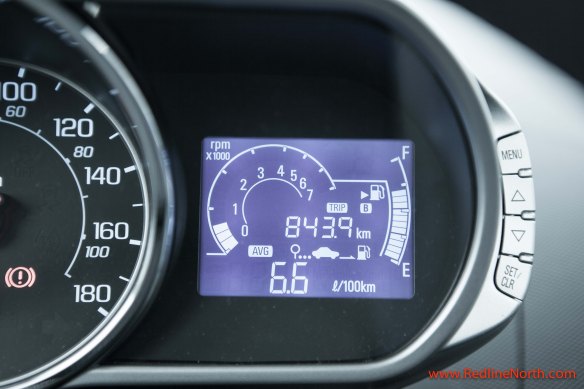
We drove in both city and highway environments and the Spark passed all the usual tests with flying colours while being ultra convenient for parking and large enough to grab a few groceries in between. All the while, we averaged 6.5L/100KMs (36 MPG US) which is very solid fuel efficiency for a combined city and highway driving experience.

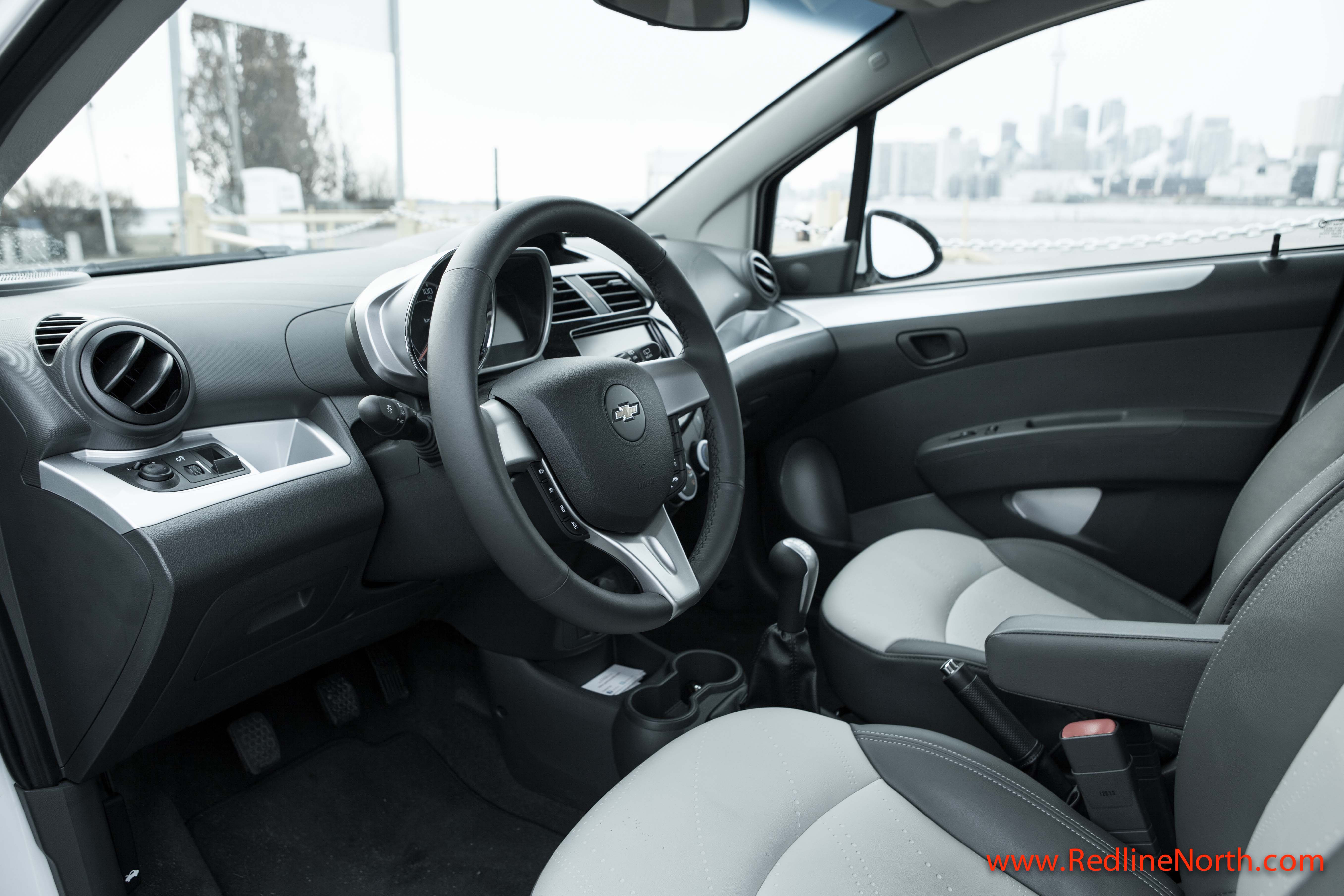
As for things we did not like, similar to the 2013 Chevrolet Sonic, the passenger seat is missing an armrest which can be aggravating on a long trip. As well, the steering wheel column is poorly designed since it is attached to the gauges as all one piece, this results in the steering wheel blocking the top of the speedometer from view.  However, aside from those two things, the Spark performed amazingly well, and was fun to drive around town.

The interior is solid for an entry level car and competes with anything on the market today. Of course, saying that, you get what you pay for as our tester was the top of the line model.

Our 2013 Chevrolet Spark review vehicle came in the 2LT Manual trim package which includes the following features:

  • ECOTEC 1.2L DOHC four cylinder engine
  • Horsepower: (hp @ rpm): 84 @ 6,400
  • Torque (lb.-ft. @ rpm): 83 @ 4,200
  • 5-Speed Manual transmission
  • Leatherette Seat Trim
  • Wheels: 15″ x 6″ Machined Faced Painted Aluminum
  • 10 airbags
  • Heated High Back Bucket Seats
  • OnStar ®System With 6 Months Directions and Connections Plan
  • Air conditioning, keyless entry, power windows, locks and mirrors, cruise control, and SiriusXM Satellite Radio
  • Trunk/storage space – Flip-and-fold rear seat with 31.2 cu. ft. (884 L) of cargo volume – based on GM Canada’s vehicle information
  • Chevrolet MyLink  TouchTM –  AM/FM stereo, 6 speakers, seek-and-scan, digital clock, 7″ diagonal colour touch-screen, Bluetooth streaming audio for music and select phones, Stitcher smartphone compatible, cruise control, steering wheel controls, software updatable for radio software and 1 USB/iPod/MP3 input jack located in front centre stack storage bin.
  • $16,995 MSRP* CAD MSRP from GM Canada’s website as of December 3, 2012

GM has recently announced they will be producing an electric version of the Spark as a 2014 model in selected markets.  The electrified version of the Spark will have a whopping 400lbs of torque and will do zero-to-60 mph in less than eight seconds. We can’t wait to get behind the wheel to see how it compares to its internal combustion engine sibling.

GM has also announced that select models of both the Sonic and the Spark will be receiving Siri integration.  Driver’s with a compatible iPhone will be able to hands free:

  • Make voice-activated, hands-free calls to Contacts on their iPhone
  • Play songs in the iTunes library, and even switch music sources automatically from AM/FM/XM radio to iPod mode
  • Listen to, and compose and send an iMessage or text message to a phone number or anyone in saved Contacts
  • Access Calendar and add appointments
  • Minimize distraction even more by keeping the screen of the iPhone from lighting up, even when Siri answers simple questions such as game scores or the dates of national holidays
  • While in Eyes Free mode, Siri will not provide answers to complex questions that require displaying a web page.

Competition

The micro or subcompact segment is growing fast as many manufactures now offer models in the category.  The key players currently competing with the Chevrolet Spark for buyers here in Canada  include the Ford Fiesta, Mazda2, Fiat 500, Smart fortwo, Toyota Yaris and Hyundai Accent.

Winter Tires – Yes or No?

This time of year in the Great White North, also known as Canada, Canadians start to think about installing winter tires on their vehicles. There are a number of benefits to installing winter tires, not the least of which is the ability to come to a complete stop over a shorter distance compared to all season tires. However, there are still a large number of people that don’t wish to pay the additional cost, or take the time to install them.

For winter tire hold outs here are some points to consider:

All season tires lose their traction below 7 degree Celsius (44.6 Fahrenheit) as the rubber compound in the tire becomes stiff.  Winter tires, on the other hand, are made with a compound that retains elasticity which gives you better control and traction down to -30 degree Celsius and below.  This combined with their unique tread pattern provide significantly more traction than all season tires, even on dry pavement.

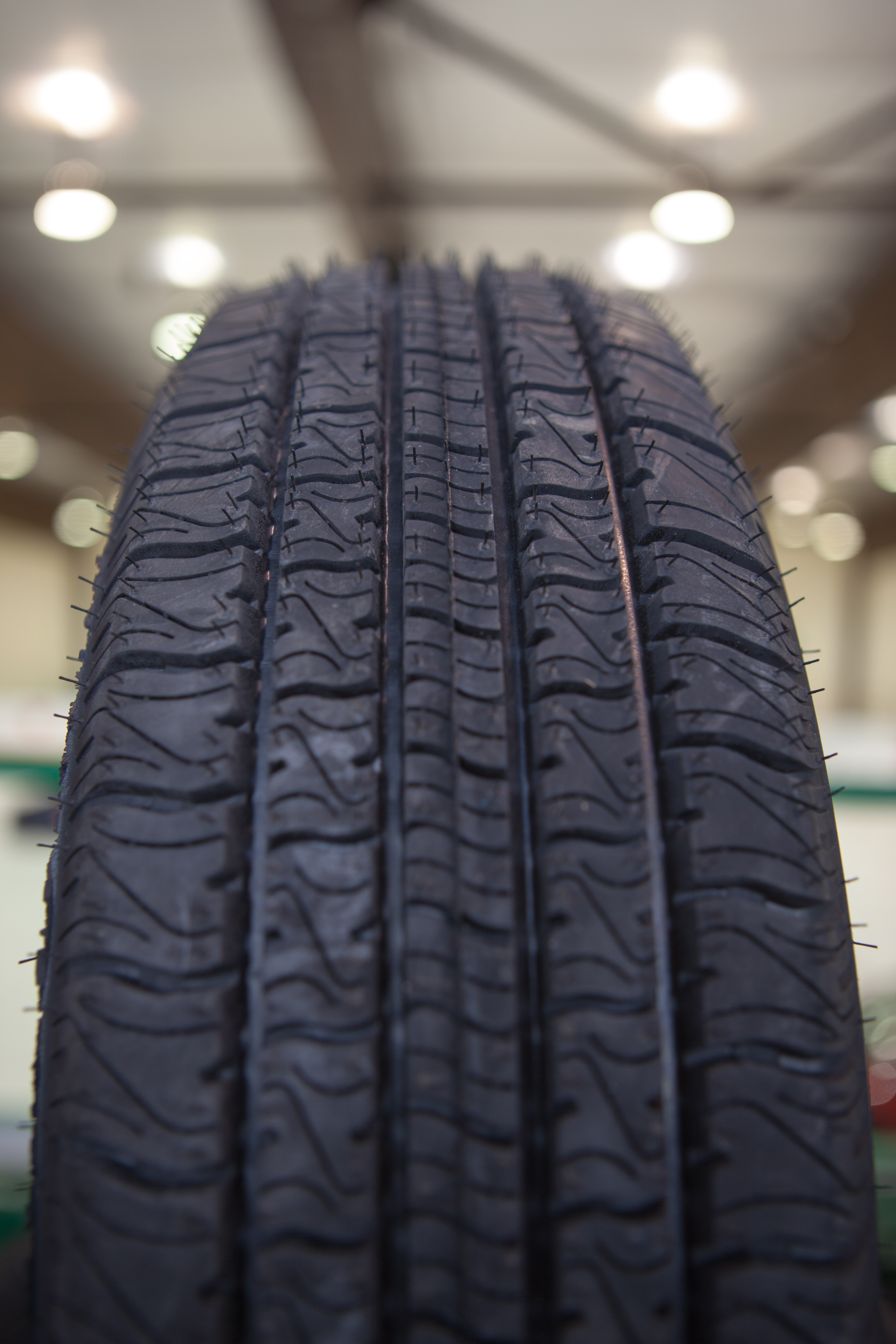
The following shows the difference in tread between an all season tire and a winter tire, in this case the Goodyear Nordic Winter Tire.

Goodyear Nordic Winter tire tread

You’ll notice the wider tread pattern in the Goodyear Nordic tire, which helps to channel away the ice and snow.

How much shorter does a car equipped with winter tires stop? The RedlineNorth Team recently participated in a hands on demonstration conducted by local retailer, Canadian Tire, showing just how much of a difference winter tires can make. Here’s a short video of the demonstration conducted at a local ice rink.  The red car has been outfitted with Goodyear Nordic Winter tires, while the blue car is running on all season tires.

Vehicles equipped with the Goodyear Nordics on average stop 45 feet shorter than the same car equipped with a leading all season tire.  The RedlineNorth Team drove both of these vehicles and can honestly say the handling of the vehicle with the all season tires, especially when trying to corner, was simply awful at speeds above 15 kilometers per hour (9 mph), where as the vehicle equipped with the Nordics had excellent grip and gave noticeably better handling to the vehicle.

Cost: The Goodyear Nordic tires start at around $100 each (although are currently on sale) and with balancing and taxes you are looking at approximately $500-$600, however, considering the cost to repair a vehicle after a rear end collision, that’s a small price to pay, not to mention the additional safety benefits for passengers.

Of course if you live in certain jurisdictions in Canada, such as the province of Quebec, winter tires are now mandatory on passenger vehicles between December 15th and March 15th – with up to a $300 fine for non-compliance. In the first two years of mandatory winter tire enforcement the new measure helped to prevent an average of 574 road crash victims.

So if you live in an area that regularly gets temperatures below 7 degrees Celsius in the winter and you do a lot of driving, the installation of winter tires is worth considering.  Once you’ve had a chance to drive a car with them installed, chances are you’ll never go back to all seasons in the winter again.

2013 Chevrolet Equinox

With the seasonal equinox just behind us, it seems like a great time for Team RedlineNorth to review the 2013 Chevrolet Equinox. During a week of extreme weather differences we drove GM Canada’s tester on the highways and back roads of Southern Ontario.

2013 Chevy Equinox LT

Overview

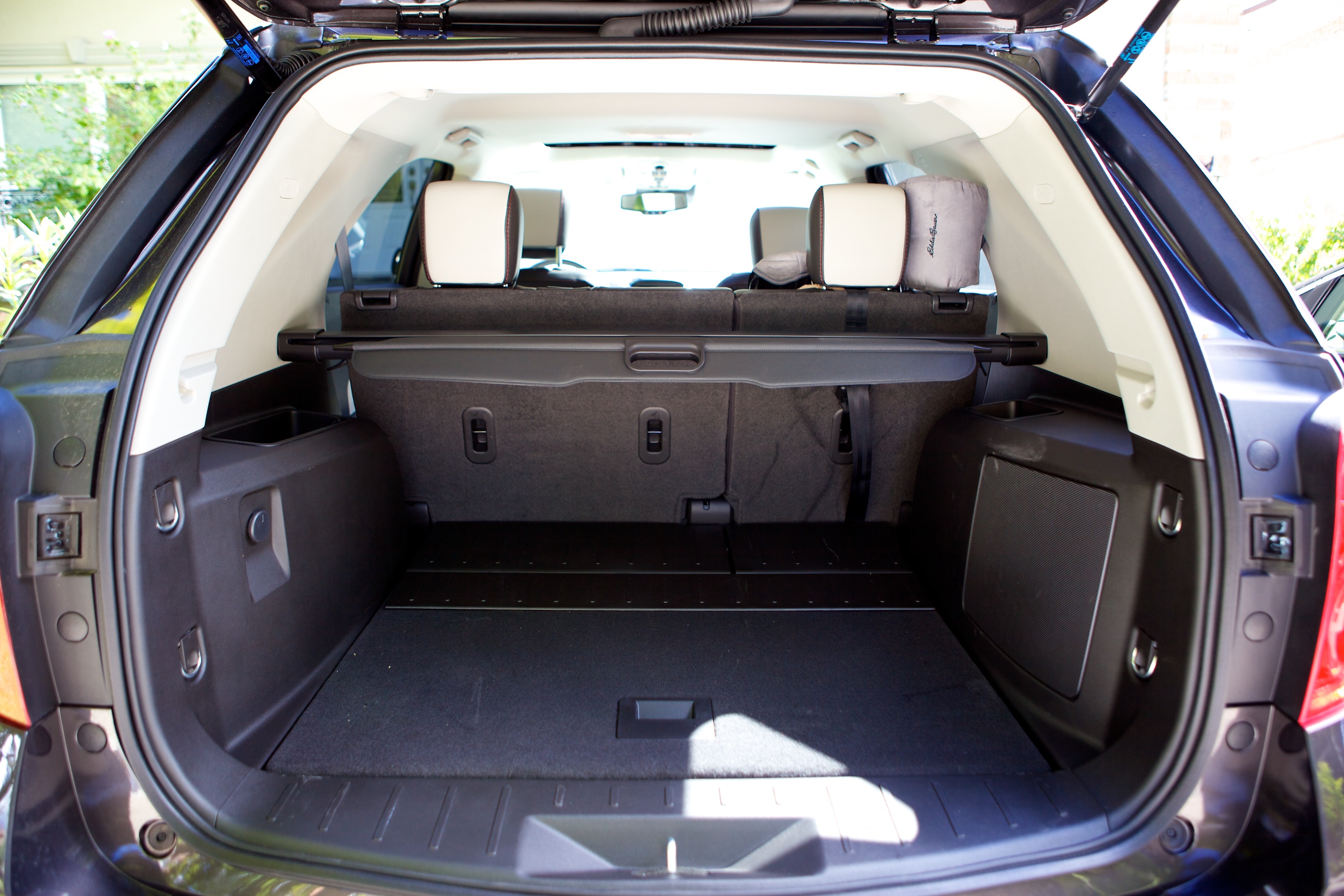
Our first impressions of the Equinox are that it is a very safe, easy to drive and solid SUV. Designed as a true kid-hauler and grocery getter, the 2013 Equinox provides a ton of cargo room.  With the seats pushed forward, cargo capacity is a generous 31.4 cubic feet and with the seats folded flat, cargo capacity increases to a massive 63.7 cubic feet. Similarly, the front seats provide ample head and leg room while the back seats provide a spacious amount of leg and hip room along with a nicely appointed centre fold down armrest.

Our 2013 Chevrolet Equinox review vehicle came in the LT (AWD) trim package which includes the following features:

  • 3.0L DOHC V6 VVT with  264 HP @ 6950 rpm
  • Torque – 222 lb. ft. @ 5100 rpm
  • 6-speed automatic with overdrive and Driver Shift Control
  • 6 airbags
  • Leather heated driver & front passenger seats
  • 8-speaker, 250-watt premium Pioneer® sound system with subwoofer
  • OnStar® with 6 months of the Directions & Connections Plan, Turn-by-Turn Navigation and OnStarRemoteLinkTM
  • Air conditioning, keyless entry, power windows, locks and mirrors, cruise control, SiriusXM Satellite Radio, USB port and auxiliary audio input jack, and Bluetooth: hands free phone and audio connectivity.
  • Power rear liftgate
  • Rear vision camera with display in radio screen
  • GM’s new lane departure warning and forward collision alert system
  • 17 inch painted aluminum wheels
  • Trunk/storage space – 31.4 cubic feet with seats folded forward or 63.7 cubic feet with seats folded flat – based on GM Canada’s vehicle information
  • Chevrolet MyLinkTM – includes personal media connectivity by Bluetooth® to vehicle audio system; voice-activated technology for audio, phone, phone book and music selection; Stitcher SmartradioTM app to listen to talk radio, podcasts and live radio through your smartphone; picture viewer; Playlist and Album Art powered by Gracenote®
  • $31,025 CAD MSRP from GM Canada’s website as of October 2, 2012 ($26,445 for LS entry trim level) * Prices based on 2012 model

Pioneer Sound System with 8 speakers and subwoofer

Interior

Interior appointments are of a high quality as our test vehicle came with a classic white leather seating package and the cabin included a very sleek dash and entertainment console.  Our only compliant was around the quality of some of the plastic on the doors and dash.

Safety

The lane departure and collision avoidance warning systems worked well

The lane departure warning and forward collision alert systems were both used extensively during the test period and worked as advertised.  We appreciated the ability to adjust the collision alert system tolerance from alerting the driver at three different distance settings. In addition, the inset convex portion of the side mirrors provided an additional angle of view while overtaking on the highway which is a nice feature. The rear vision camera system was also used extensively in parking lots and is a great option due to the limited rear view visibility. Finally, the hill start assist feature, while strictly not a safety feature, was welcomed when exiting underground parking garages and worked well with no perceivable rollback.

Handling

The Equinox engine felt responsive for an SUV, providing quick acceleration on the highway and overtaking with ease. We tested out the Drive Shift Control, which allows the driver to up and down shift at the touch of the button.  However, like most ‘manual’ modes of automatic transmissions it didn’t really replace the feel of a manual transmission.

We drove the Equinox in both city and highway environments and our overall fuel economy average for the week was 11.9L/100 KM.  The city driving really affected things as the 3.0  engine naturally gets a bit thirsty in Toronto’s stop and go traffic.  However, we found the real time feedback on fuel consumption helped moderate our driving behaviour to maximize overall fuel economy.

Convenience

The Equinox had a number of convenience features that helped round out the overall driving experience. We really appreciated the ability to automatically adjust the opening of the rear trunk between three quarters to fully open at the turn of a dial.

While real time fuel efficiency statistics such as, current range and average fuel economy are nice to have, they were somewhat buried within the menu system and required multiple button presses to access.  It would likely be useful for this information to be displayed on the larger navigation screen.

Lastly, the arm rest storage space was more than ample and an interior light is provided to light up the console area to help you find what you are looking for.  In addition, a USB port and 12 volt charging outlet are also included in the arm rest compartment.

Ample rear seating

Competition

With so many competitors in the tightly battled smaller SUV/CUV space, GM certainly has their work cut out to make sure they continue to get their slice of the consumer pie. However, the 2013 Chevrolet Equinox remains very strong among its peers and is definitely worth a look if you are in the market for a smaller SUV/CUV.

Some of the other nameplates in the segment which will challenge GM for buyers are the Ford Escape, Nissan Rogue, Toyota RAV4, Kia Sportage, Hyundai Tuscon, Honda CR-V and Mazda’s CX-5.

Coyote Speed Camera Warning System

Coyote is a subscription based speed camera alert service used by over 1.7 million people in Europe. It uses crowd sourced information from other Coyote users to warn drivers against fixed and mobile speed traps. Coyote goes beyond other traffic focused apps by giving subscribers additional services, such as indicating when your vehicle enters an average speed zone allowing you to make real time speed adjustments by calculating your average speed in the area.

Dashboard Mounted Coyote

Screen Shot

As with all crowd sourced based applications the larger the user base, the more likely the information will be accurate, timely and beneficial to the end user. This is where Coyote’s user based of 1.7 million customers certainly provides a leg up to other systems and is a product worth considering for customers in the 28 European countries the service is offered.  The cost of the Mini Coyote V2 device in the UK for example, including a 12 month subscription is £185.00 (including VAT).

The proliferation of these types of smart phone applications, or purpose built devices, does beg the question as to whether they ultimately provide safer roads, or simply allow people break the law?

On the one hand by knowing the specific location of a speed trap the majority of drivers will slow down, which is the intended purpose of the trap in the first place.  On the other hand, drivers may simply take another route and continue to drive above the speed limit, or in an aggressive manner.

Whichever side of the debate you fall on, technology will continue to be used to notify drivers of speed trap locations and police forces and governments will continue adjust their tactics as a result.